Showing posts with label Asia / Bhutan. Show all posts

Friday, 1 October 2021

My Favourite Spots in the Himalayas

Brahmaputra in Tibet ©Solange Hando

With its source in the Himalayas Kailash range, this is the young Brahmaputra draped in Buddhist prayer flags for an auspicious journey from Tibet to India and Bangladesh, where it will join the Ganges in the Bay of Bengal. The name means 'son of Brahma', the Hindu god, unusual since most rivers refer to female deities. 


Bhutan Tiger's Lair ©Solange Hando

Close to Paro and a morning climb to over 3000 meters, this is the kingdom's most iconic landmark where, they say, Guru Rinpoche flew on the back of a tigress, to meditate in a cave before spreading Buddhism across the valley. Blue pines, rhododendrons, waterfalls and stunning views, it's a fabulous trek to the top or you can ride a pony to the cafeteria half-way up.


Punakha in Bhutan ©Solange Hando

At just 1250 meters, the former capital feels almost tropical and is the winter home of the monks from Thimphu. At the confluence of two rivers, the fortified monastery (dzong) is an important pilgrimage site, especially during festival time. But Punakha is also a great place to trek in gentle hills and discover Bhutan's pristine nature and traditional villages. Bears in the forest but they tend to keep away.


Ladakh in Northern India ©Solange Hando

In summer you can fly from Delhi to Leh, Ladakh's capital, but the 2-3 day road journey from Manali takes you through spectacular scenery and allows you to acclimatise to high altitude. Then heading west on the edge of disputed Kashmir, you reach this so-called 'moonscape', a rugged barren land close to Lamayuru, one of the oldest and most remote monasteries in Ladakh.
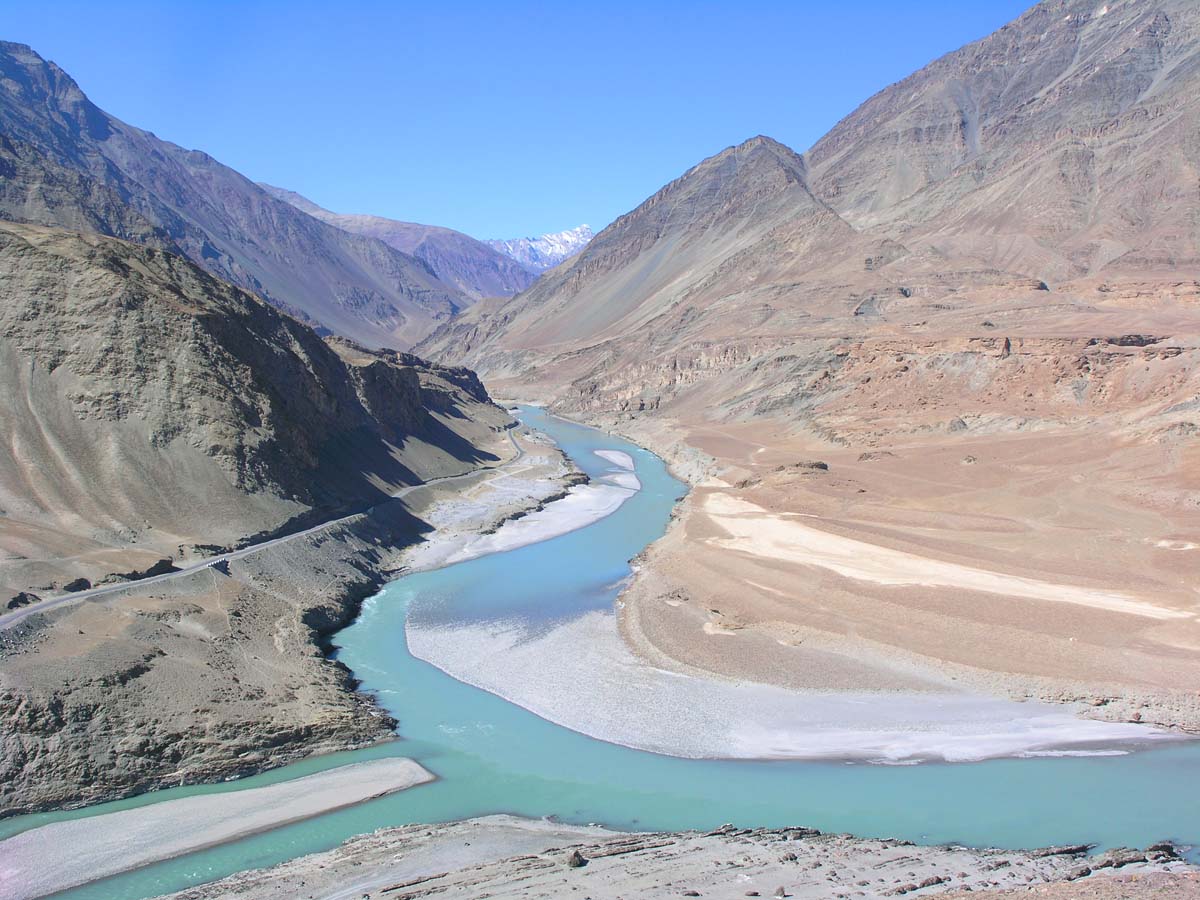


                                                               Ladakh Peaceful  Rivers ©Solange Hando

Equally stunning but in lovely pastel colours, this is the confluence between the Indus and Zanskar rivers, near Ulektopo, not too far from Leh. In winter the frozen Zanskar attracts adventurous trekkers but in the brief summer the scenery is just magic, two rivers for the price of one...


                                                                Bodhnath in Kathmandu ©Solange Hando

My favourite temple in Nepal's capital, it is said to be the world's largest Buddhist stupa which regained its former glory after the 2015 earthquake. Dawn and dusk are special times when Tibetan refugees and Nepali alike walk seven times around the shrine, meeting friends and spinning prayer wheels, sometimes prostrating, as monks chant to the sound of long horns, cymbals and drums.


                                                                     Pokhara in Nepal ©Solange Hando

A brief flight or a road journey west of Kathmandu, this is the lakeside resort of Pokhara, altitude from only 900 metres or so but an ideal base for trekking in the Annapurna or just enjoying the hill top views, snow-capped mountains stretching 140 km, including the iconic Fishtail right in front of you. Browse around the resort, sail to the sacred island and see the sunrise from Sarangkot.


                                                                     Sunset on Everest ©Solange Hando

View from Kalapatar, the 'black rock' at 5644 metres, above Gorak Shep, the original Base Camp.
All dark except Everest, catching the last rays of the sun
Amazing


Saturday, 9 January 2021

2008? Most Amazing and still Dreaming...

Jigme Khesar Namgyel Wangchuck, King of Bhutan ©Solange Hando

If anyone had ever told me  I'd shake hands with a King on his Coronation day, I would never have believed it. But on 6th November 2008, there I was, in Bhutan, joining in the celebrations for five incredible days of local colour and traditions.
The son received the 'raven's crown' from his retiring father (52) before meeting the special guests who offered good wishes and auspicious white scarves.


Bhutanese Pageantry on Coronation Day ©Solange Hando

Following a religious ceremony in Punakha, the fomer capital, a few days earlier, the main event was held in Thimphu, the modern capital, in Tashichho Dzong, a fortified Buddhist monastery rebuilt in modern times but loyal to ancient traditions.
Dancers, drummers, horn blowers, flag bearers, the courtyard was a blaze of colours as groups from far and wide attended, wearing bright costumes and traditional boots.


Gifts for the King ©Solange Hando

Gifts were brought to the King from across the country, a bag of rice, a sack of grain, fruit, flowers, as thousands of locals sat in the stadium to watch it all. Most exciting were the elephants from down south which very few people in the capital had ever seen.
No diamonds, no jewels, but His Majesty stood through it all, blessing every single gift before it was returned to its owner by royal request.


His Majesty Meeting the People ©Solange Hando

In the afternoon, people gathered to meet their King, offering more traditional scarves and receiving a special coronation medal. So many people wanted to pay their respects, an extra day had to be added at the end of the week.
Everyone wore their best national dress while the King's yellow cape is the royalty symbol. See how the King bends down to get close to the people he promised to serve. The gathering lasted a full afternoon and His Majesty had to request his family's help to get around all present.


Mingling with the Locals ©Solange Hando

I could have stayed with the press but I loved to meet the locals, their English was amazing, even my little friends the boy monks.
I met families who had walked across the mountains for over a week to see their King and Buddhist nuns who had hitched a lift on an already overloaded truck, after their names were picked out from a bowl. They promised to report everything to the nunnery on their return.


Traditional Dancing ©Solange Hando

Religious dancers in robes and masks performed to ensure auspicious times but this was also a celebration for the people and by the people, as schoolchildren and others awaited their turn to dance for His Majesty.
They had been training for months right across the country and designed their own costumes with local materials.
It had been agreed that the week's celebrations should come at minimum cost for the country and even for special guests (only a handful of them). 


Archery National Sport ©Solange Hando

But there was plenty of fun, including a strong man contest, a tug of war, a pillow fight when the loser would end up in a bowl of water. The King even left his seat to have a closer look and roar with laughter...
Then before the farewell dance, there was an archery contest when royal members took part . See the King above, raising his bow in the middle, ready for the traditional victory dance when his team scored top points.


Still Dreaming ©Solange Hando


Saturday, 9 May 2020

Rainbows Bright and Beautiful

The Iguazu Falls ©Solange Hando

My favourite rainbow on my favourite Falls, Iguazu stretching in the rainforest across Argentina and Brazil. There are up to 275 falls, most of them in Argentina but best seen from across the border.


The Zambezi River in Zambia ©Solange Hando

Rainbow over the Zambezi river just above the Victoria Falls, discovered by David Livingstone who named them after his Queen. The Falls continue across the border in Zimbabwe.


Rainbow in Paro ©Solange Hando

This is in Bhutan, 'land of gross national happiness' and my top destination. This is where you land (not the capital) and the monastery by the river is one of the most sacred in the kingdom.


Lake Nahuel Huapi in the Andean 'Lake District' ©Solange Hando

This lake is in Bariloche, a pretty Alpine resort in Argentina (more lakes in Chile) with superb scenery in a National Park and activities, trekking, climbing or skiing.


Nur-Sultan in Kazakhstan ©Solange Hando

Now what is this?
For me this is a Rainbow
Built by man
The Light at the End of the Road
 Hoping we can all get together again very soon
Take care and keep safe

Saturday, 16 April 2016

Bhutan, great but how much does it cost?

Punakha Valley ©Solange Hando


How much ?
From US$200 a day, depending on group size and season

Expensive or value for money?
You decide
Here's what's included:


Bhutanese Guide (included)  ©Solange Hando


qualified guide 24/7
full board in traditional comfortable hotels
all internal transport in private vehicle
all entrance fees / festivals 
trekking staff  / equipment if applicable
all taxes


Traditional Bhutanese Hotel (included) ©Solange Hando


Any extras?
supplement for 5 star accommodation
drinks (other than water and tea)
personal purchases, tips at your discretion

Now, consider the cost of one night -room only- in London
What do you think?


Traditional Festival (included) ©Solange Hando


Basics aside, what else do you get for your money?
An amazing insight into a unique culture:
Where else is Gross National Happiness enshrined in the Constitution?
Where else would a king stop his car to chat to a farmer?
Or join in an archery contest on his coronation?


Bhutan's National Sport ©Solange Hando


Add
a pristine natural world
gentle people
superb arts and crafts
and to top it all
unrivalled views of Everest along the way


Everest /Himalaya on the way to Bhutan ©Solange Hando


Tempted?
After four visits, I can't wait to return

For more information, see other blogs on this site or check Blue Poppy Bhutan for tailor-made trips.

Saturday, 19 March 2016

Thimphu, Bhutan's Capital

Thimphu, Bhutan's Capital ©Solange Hando

Nestling in the hills at over 2000 metres, Thimphu is a capital like no other. No traffic lights, no airport, the former were promptly removed by popular demand, the second just wouldn't fit into this hemmed-in valley, Visitors land in Paro, 54 km away.

Thimphu replaced Punakha as capital in the mid-1900s and the population has now reached around 70,000 with ongoing developments striving to accommodate rural migrants . But at the heart of the Himalaya, Thimphu still has the 'wow' factor as an endearing example of traditional Bhutanese values.  


Tashichho Dzong in Thimphu

On the bank of the Thimphu River, all red roofs and gilded pinnacles, the 'fortress of glorious religion' is the most important building, a civic and religious centre all in one. Renovated and extended by the 3rd King, it's the summer residence of the monk's body and still retains some of the earlier structures, notably the central tower and temples.

Surrounded by roses and lawns, the dzong is just steps away from the Royal Cottage, home of the current king, and faces the National Assembly across the river. Major events have included the 2008 Coronation and the annual tsechu festivals.


Tsechu Festival in Thimphu Dzong ©Solange Hando


For any visitor, a festival is the highlight of the trip. For the Bhutanese, it's a chance to earn merits, meet family and friends and have a good time as you watch lay and religious dancers, listen to ancient tales and laugh at the antics of medieval-style jesters.

Everyone wears their finest traditional clothes and from the crowds tightly packed in the courtyard to  the masked dancers twirling on the flagstones, it's a dizzying kaleidoscope of colours when the deep chanting of monks mingling with drums, horns and bells sends shivers down your spine.


Clocktower Square in Thimphu ©Solange Hando

The town may have grown but as capitals go, it's still modest, relatively quiet and lined with traditional buildings. Even the new hotels follow suit whether it's the shape of the roof, the Buddhist symbols painted on the walls or carvings along the eaves or around doors and windows.

There are fine bakeries and restaurants, small shops and emporiums brimming with arts and crafts, including textiles, jewellery, carvings, paintings and other religious items.


Institute of 13 Arts and Crafts in Thimphu ©Solange Hando

Arts and crafts are important in Bhutan since creating beautiful things is akin to an act of worship, a way of showing appreciation for the gifts of nature. The 13 arts and crafts were defined by the 17th century Shabdrung who unified the country and talented youngsters can further their training in specialised institutes, one in East Bhutan and other in Thimphu.


The Golden Buddha ©Solange Hando

But wherever you travel, you cannot doubt that Buddhism is the mainstay of Bhutanese culture and Thimphu is no exception. Prayer flags flutter in the breeze, prayer wheels tinkle here and there and from the Memorial Chorten to the Cheri monastery, traditional values continue to thrive.

The latest witness is the newly-built giant Golden Buddha, rising on a hill above town to 'bestow blessings, peace and happiness to the whole world.'


Saturday, 27 February 2016

Bhutan, Farmhouse Stay in Paro Valley

Traditional Farmhouse in Paro Valley ©Solange Hando

Bhutan has excellent hotels, in lovely traditional style, but for anyone who would like to get close to the 'real thing' for a day or two, a farmhouse stay is truly rewarding. Simply request it at the time of booking.

It may not be luxurious but accommodation is clean with basic facilities and definitely a warm welcome. It's a genuine chance to live with a Bhutanese family and experience something different.


Heating up Stones for the Bath ©Solange Hando

After a long flight or a day's trek , there's nothing more relaxing than a hot stone bath and most farmhouses will have one. Stones from the river bed are heated on an open fire then carried with pincers and dropped into the small compartment of a wooden tub. The water steams and sizzles and more stones can be added if needed.

No need to worry about emptying the bath for when guests have finished, family members may well follow to make full use of the hot water.


Dinner Farmhouse-Style ©Solange Hando

After the bath, time for dinner, home cooked of course and based on local produce, seasonal vegetables such as spinach or mushrooms, crispy potatoes, cheese sauce and rice, which can be the tasty red variety said to be the best in Bhutan.

Then, there is time to help the children with homework or listen to your host playing a traditional lute before gazing at the stars or retiring to your cosy room draped in colourful rugs and blankets


Smiling Hosts in Farmhouse ©Solange Hando

In the morning, you might wake to the call of a cockerel as your hosts start their working day, milking the cows, putting fresh water in the bowls around the family shrine and cooking breakfast.

Meanwhile, the mountains glow pink in the rising sun, prayer flags flutter on the edge of the paddy and the river tumbles over the stones, mingling its crystalline sound with the twittering of birds.


The Paro Valley ©Solange Hando


Saturday, 19 December 2015

Bhutan, Progress and Tradition

The National Assembly Building in Thimphu ©Solange Hando

Progress came with a bang in 2006 when the 4th King announced his forthcoming abdication in favour of his son  and the institution of a democratic government. Bhutan had come of age and the new National Assembly held its first session in 2008. The Bhutan Peace and Prosperity Party won every seat but two, but the situation was reversed in 2013 when the People's Democratic Party secured 32/47 seats.

Once again, change was on its way but in this traditional building oozing Buddhist values, the mission is the same, whoever is in power: 'to achieve the goal of Gross National Happiness enshrined in the Constitution' and endorsed by the highly-respected king and monks' body. 


Bright Lights in Thimphu ©Solange Hando

Thimphu has grown tenfold in the past decade or so and western dress is a common sight though at festival time, everyone loves to show off their best traditional clothes, kira for the ladies and gho for the men. The capital has its share of modern shops but craftsmen and artists still practise their ancient skills and on the roundabout, a policeman directs the traffic with the grace of a ballet dancer. There are no traffic lights.

Likewise, towns such as Punakha or Wangdi Phrodang have seen new districts popping up, financed by the World Bank and paying lip service to traditional architecture. But apartments are modern, less susceptible to fire and the people like them.


Paro Airport ©Solange Hando

Efforts to increase tourism have been successful and the infrastructure is still catching up. Druk Air, the national carrier, now shares the load with the private Bhutanese Airlines and there are a number of domestic flights which operate subject to weather conditions and passenger numbers.

The west to east highway is being upgraded across its entire length so traffic is slower than it ever was but the scenery is just as stunning.


The Black Mountains ©Solange Hando

Respect for nature and all living things remains at the heart of Bhutanese culture and that is unlikely to change for the time being. The slightest hint of a new dam arouses concerns about wild life and so far the balance is on the side of conservation. Bears roam unhindered in the forest, snow leopards and even tigers survive at high altitude and in the Phobjikha Valley, the return of black-necked cranes in the autumn is greeted with a special festival.


Tilling the Land in the Ura Valley ©Solange Hando

At first sight the pace of change is much slower in the countryside and there lies the greatest challenge for 21st century Bhutan: youngsters heading for the city, drawn by the bright lights and the lure of well paid jobs that are few and far in between. Private enterprise is in its infancy and until business skills are developed, the problem is likely to grow.

Meanwhile in the country, there are fewer farmers to till the land and fewer young people to care for the elderly and keep families together.   


Children Attending a Festival, Punakha Dzong ©Solange Hando

But it is the children who hold the key to the future and with Bhutan's laudable efforts in education and encouragement from all leaders, religious or civic, there is every reason to hope that they will achieve a fine balance between tradition and progress. Bhutan is not a 'museum' but it does have something special which is worth preserving.


Saturday, 12 December 2015

Bhutan's Royalty

 Traditional Festivities in Bhutan ©Solange Hando

Bhutan is changing for sure but traditions and culture remain as strong as ever, anchored in the Buddhist faith and respect for the royal family.

In 2015, celebrations were held throughout the kingdom in honour of the 4th King's 60th birthday. They culminated in Thimphu on November 11th when soon after dawn, crowds made their way to the stadium to enjoy a colourful mix of parades, traditional dances and games and a heartfelt tribute from the current king to his father.


His Majesty the 5th King Meeting his People ©Solange Hando

Democracy came to Bhutan in 2008 but the royal family is as popular as ever, symbolising the country's unity and culture, but what the people appreciate most is their approachability and simple lifestyle. 

Don't expect a sumptuous residence or even a castle, the Royal Palace is a comfortable but modest cottage tucked among the trees on the edge of the capital, with one guard on duty at a gate you might not even notice. Then there's a retreat in Punakha which would do nicely for a solitary monk.

 Just as important, the king is close to his people, mingling with the crowds at festival time, walking across the kingdom to meet them if the occasion demands or stopping his car at the roadside to chat to farmers and villagers, listening to their concerns as an attendant makes notes which will be followed up. Just like his father did. 


Portraits of the 4th King (right) and his Son at the Birthday Celebrations ©Solange Hando

During his 34 years on the throne, until he stepped down for his son in 2006, the 4th Dragon King of Bhutan moved his country forward in bold but measured steps, reinforcing unity under the 'one nation, one people' banner, modernising the kingdom and opening the gates to the outside world while maintaining traditional Bhutanese values.

But most of all, he gave democracy to his people because he felt the time was right. Both his retirement and the new system shook the nation at the time but today, he is seen as an enlightened leader who paved the way for the future.


Punakha Dzong, Royal Wedding Location ©Solange Hando

Meanwhile in 2011, the 5th King married the young Jetsun Pema in Punakha dzong, 'the fortress of great happiness' where the first King of Bhutan was crowned. After the wedding, the King and his Queen walked more or less all the way back to Thimphu, 71km and 13 hours away, so they could meet the thousands of people who lined up along the road to pay their respects.

That's just one of the reasons why they call His Majesty 'the People's King', keen to greet them one by one and lend a hand as needed: when the magnificent dzong of Wangdi Phrodang was destroyed by fire in 2012, he left Thimphu and rushed to the site to help villagers salvage what they could.

Then at the royal celebrations in 2015, the 5th King delivered the long awaited news that a royal heir was on his way. The crowds loved it and a gentle wave of jubilation rippled across the stadium. The baby is due in the early spring and there couldn't have been a better birthday present for the 4th King.


The King and Queen of Bhutan


The 4th King had four wives but His Majesty Jigme Khesar Namgyel Wangchuck has opted for one and a love marriage, even holding hands in public in a land where Gross National Happiness is enshrined in the Constitution.


Saturday, 11 April 2015

Visit Bhutan Year 2015, Royal Birthday Celebrations

Punakha Iconic Dzong, Bhutan ©Solange Hando


2015 has been designated Visit Bhutan Year to celebrate the 60th birthday of His Majesty Jigme Singye Wangchuck, the Fourth King of Bhutan.
In 2008 His Majesty stepped down in favour of his son, placing on his head the crown which he had worn since 1974.

But before handing over to His Majesty Jigme Khesar Namgyel Wangchuck, the Fourth Dragon King had taken significant steps towards the modernisation of his country, cautiously opening the doors to sustainable tourism, coining the celebrated phrase of 'Gross National Happiness' as top priority and smoothly introducing the first democratic government before any pressure was put to bear.


Traditional Festivities ©Solange Hando


Birthday celebrations are already under way and scheduled to take place across the country and throughout the year to culminate in Thimphu on November 11th.

Celebration events include the unique Druk Wangyel to be performed in December near Thimphu and the Jomolhari Festival highlighting the local culture and natural wonders of Bhutan's second highest mountain.


Respect for Nature ©Solange Hando


As a Buddhist country, the Bhutanese take exemplary care of their environment and that begins with education as pictured above. One of the most important events will be the mass tree planting due to take place in the central valleys of Bumthang.

The goal is to plant 50 000 trees in one hour and there is no shortage of volunteers. This would beat the existing record in the Guinness Book but the true aim is to give nature a helping hand and reaffirm Bhutan's commitment to its pristine environment.


Archery, the National Sport ©Solange Hando

The 2015 festivities will  range from traditional festivals with sacred and lay dances to cultural events
 provided by the people and for the people, all equally colourful and breathtaking.

As the national sport, archery is certain to feature, as seen here in 2008 when the newly-crowned King (centre) performed the victory dance with his team.


Just Landed, Paro Airport ©Solange Hando


So if you have been planning to visit Bhutan one day, this is the year to do it and discover what makes this tiny Himalayan kingdom so special,
Hope to see you there...