Saturday, 23 September 2017

Canadian Rockies, Athabasca Glacier, Columbia Icefield

The Athabasca Glacier in the Canadian Rockies ©Solange Hando

Located in the Jasper National Park and part of the Columbia Icefield, this is one of the world's most accessible glaciers, a comfortable day trip from Jasper (105 km) but also feasible from Lake Louise or Banff (195 km).

Up there, at 2000 metres, it's likely to be cold and the weather can change in minutes from dazzling sunshine to the odd snow shower. Take warm clothes and suitable shoes.  


The Skywalk, Athabasca ©Solange Hando


The Athabasca is a popular attraction so if you plan to take part in the 'double adventure', available in season, book well in advance, especially if you want to request specific times.

 The Skywalk is a good start, taking you on a semi-circular glass walkway suspended, it seems, between heaven and earth. Below you is the vertiginous drop of the Sunwapta Valley where pine trees cling tenaciously to barren soil, and towering above you, snow-capped mountains reaching over 3000 metres.


 Ice and Snow, Columbia Icefield, Jasper National Park ©Solange Hando


Take time to relax in the visitors' centre, browse the exhibitions and enjoy the stunning views then head down to the glacier for an exciting ride on the ice to the very edge of no man's land.

The Athabasca is six km long and up to 300 metres deep but despite some seven metres of fresh snow annually, this 10,000 year old natural wonder recedes by an alarming five metres a year, as you will see in places from the accumulation of rubble and rocks.


Ice Explorer on the Athabasca ©Solange Hando


Like some sort of giant from a fiction film, the Ice Explorer takes you down a very steep slope then across the ice until you reach the out of bounds limit. Rocky peaks, snowy tops all around and ahead of you, the pristine ice field laced with hidden crevasses.

Sometimes you might hear a rumble in the distance and witness an avalanche tumbling down towards you. It may send shivers down your spine but on a guided tour, you are in good hands.


Standing on the Edge ©Solange Hando


Then before the Explorer turns round, you can step out and walk on the ice, long enough to take a few photos, touch the snow and feel the vibes as clouds pile on the horizon above the stillness of this vast natural world.


Saturday, 2 September 2017

Travel Writing? How to Sell every Feature you Write

Flying High ©Solange Hando


How do you start?
Think 'idea', the tighter the better
A flight over Everest, a festival, sampling the local food
Be original, less is more
and
Easier to sell


What next?
Find a market
Spend time browsing all sorts of publications
Who would be interested in your idea?
Who are the readers?
Think age group, budget, interests, families,couples


Made your choice?
Pitch
That makes you a professional
That saves the editor's time and yours
How should you pitch?
Show the editor you are familiar with the publication
Write your pitch in similar style
Be brief and to the point
Offer pictures


Keep Going ©Solange Hando


Got the go ahead?
Brilliant
But before you write a single word
Study the publication in detail, both format and style
Word count
Number and length of paragraphs
Choice of vocabulary, speech, quotes
1st or 3rd person
Fact box?


Next take a look at your pictures
It will
Refresh your memory
and
Help you to decide what to put in or leave out
Choose the best, the most original
Images will sell your words.


Ready to start?
Spend time on the 1st paragraph, it must grab attention straightaway
Keep your second best anecdote for the end
In the middle:
Vary the pace, highs and lows, anecdotes and facts
Paint a picture:
Include the senses
Avoid clichés
Be original


Sail Away ©Solange Hando

When all is done
Double check, click send
Now you're on your way

Would you like to read more?
Check out

Just 100 pages on the road to success
Good luck
and
Happy travels


Saturday, 12 August 2017

Niagara Falls, Canada

First View of the Niagara Falls from Canadian Side ©Solange Hando


Here they are: the American Falls to the left and the thin Bridal Veil, with Luna island between them, and to the far right, beyond the long Goat Island, the (at times disputed) Canadian Horseshoe Fall. 

The Niagara Falls are neither the highest nor the most scenic -within sight of the road and tourist developments- but they are the most powerful in North America and claim the highest flow rate in the world with an average of four million cubic feet per minute.


The Horseshoe, Niagara ©Solange Hando


With its 2600 foot wide crescent, the Horseshoe is the most expansive of the three falls, boasting up to 90% of the water. There are vantage points behind the fall, accessed via elevators and tunnels and that is one way to feel the full force of the water tumbling over 160 feet.

It may be a good place too to reflect on the many daredevils who defied the falls, the first one a 63 year old school mistress who went over in a barrel or the Frenchman Blondin who walked across on a tightrope, carrying his boss, top hat and all, on his back.


Getting up Close to the Horseshoe ©Solange Hando


But most exciting is the boat trip to the base of the falls where you can fully appreciate the height as well as the power and thundering roar.

The Horneblower on the Canadian side and the Maid of the Mist on the American side constantly ply the turbulent waters  with a full load of excited passengers. Plastic ponchos are handed out, red or blue respectively but expect to get wet nevertheless. Be careful with cameras.


The Upper Niagara approaching the Falls ©Solange Hando


After the boat trip, you can stroll  along the cliff-edge promenade, part of the parkland created to beautify the scene and prevent further developments.

Draining  Lake Eerie, the Niagara river flows north for 36 miles to empty its waters in Lake Ontario. Some 12,000 years ago, the falls were located near Queenston but due to erosion, they gradually receded south towards Lake Eerie.


Looking Downstream ©Solange Hando


Canada to the left, USA to the right and in the distance the Rainbow Bridge which forms the border. Nowadays walking across the bridge is subject to strict control and not as straightforward as it used to be.

Downstream, beyond the falls, the Niagara enters a gorge, over six miles long. It is too dangerous for kayaking but there is a rambling trail and an exciting aerocar to take you across the river, suspended in mid-air over a whirlpool. Nearby is the helicopter base for bird's eye views of the falls but if this is beyond budget, go up the Skylon Tower at the Falls and enjoy the panorama from the observation deck.


Aerocar downstream from Niagara Falls ©Solange Hando


Saturday, 29 July 2017

Toronto, Capital of Ontario

Welcome to Toronto ©Solange Hando

With a population 4½ times larger than Ottawa's, Ontario's capital almost feels like a dream, a true cosmopolitan city where all 'new Canadians' are welcome, regardless of origin, religion or culture.

It's Canada at its best, open, tolerant and caring under the guidance of its young liberal PM Justin Trudeau. The New Toronto City Hall (above) reflects success.


CN Tower and Harbourfront ©Solange Hando

Rising to 553 metres above lake Ontario, the communication tower has been the city's icon for over 40 years. In less than a minute, elevators whizz you up to the main observation deck (346 metres)  with a glass floor section, outdoor terrace and indoor refreshments.

If you really love heights, take the next lift and enjoy an even more dizzying panorama from 447 metres above the city and the white dome of the Roger's stadium. In season, adrenaline seekers can try the 'hanging over the edge' experience.


Toronto Islands on Lake Ontario ©Solange Hando


The CN tower also guarantees one of the best bird eye's views of the Toronto islands, 15 altogether interconnected by bridges or pathways across 5 km.

Just 13 minutes from downtown, it's a lovely escape from the bustling streets with nature trails and leisure activities, including boating and swimming. Spend a whole day if you can or book a tour from the harbourfront, worth it for views of the city's skyline on one side and the vast expanse of lake on the other.


Toronto from the CN Tower ©Solange Hando

On the north bank of Lake Ontario, Canada's largest city is hemmed in by ravines on the land side and an urban forest of 10 million trees. The economy is booming and developments are ongoing. 

This is a modern provincial capital with vibrant universities, thriving businesses and myriad tourist attractions from stunning museums and its world famous aquarium to vast shopping malls or the alleyways of China town and markets brimming with local produce.


Quaint and Stylish in Toronto ©Solange Hando


Wander around and you may well come across an old building or two tucked among the tower blocks or a quiet tree-lined district and brightly-coloured houses which seem to belong to another age.

Look out for Cabbage Town, originally an Irish working class settlement, now an attractive place with restored houses, or the Kensington area with colourful ethnic lanes and gentrified houses just steps away. Set on a grid pattern, the city is easy to explore, pick up a map and you can't get lost.


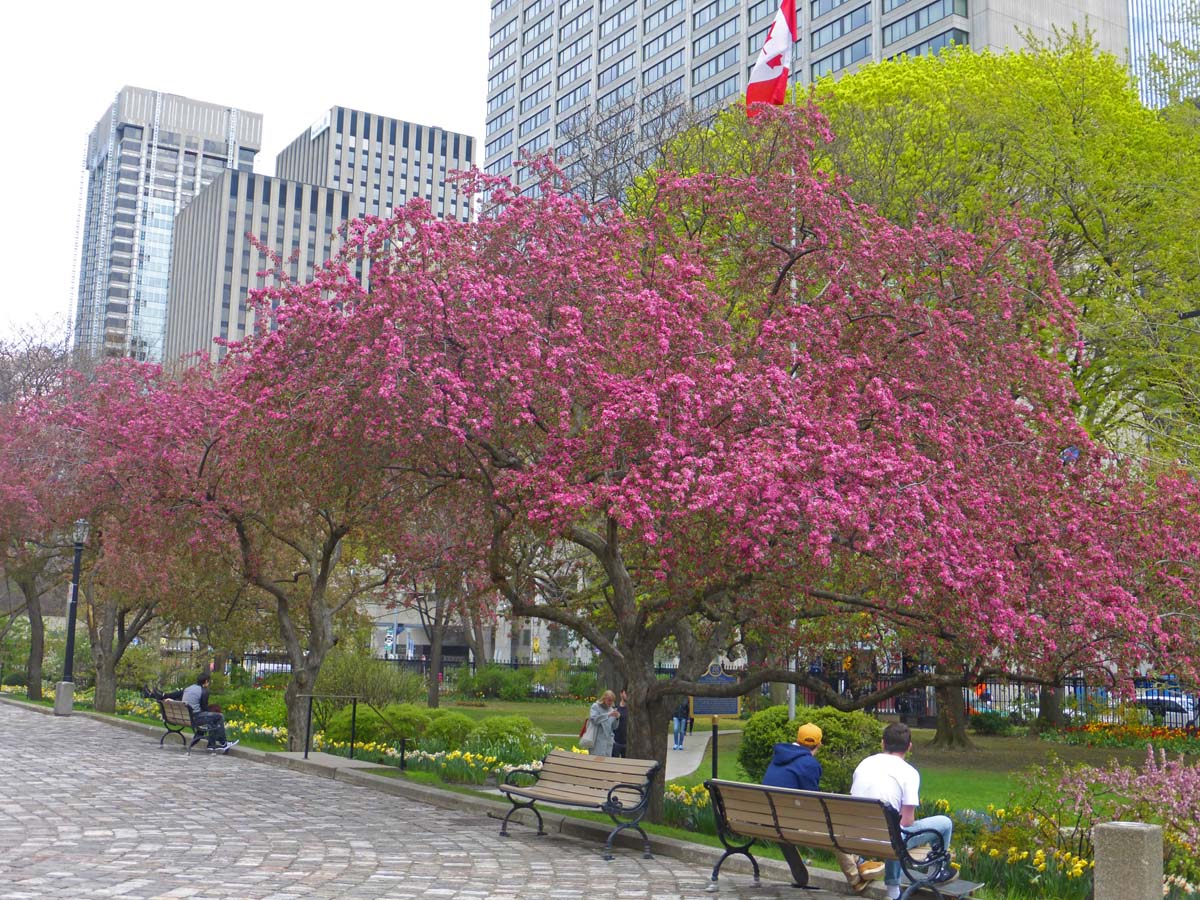
Cherry Blossom in Toronto ©Solange Hando

Toronto may have extremes of temperatures but it is nevertheless on the same latitude as the French Riviera and from spring blossom and tulips through to autumn, the many parks and gardens are simply delightful.


Saturday, 1 July 2017

Lisbon, Day Trip to Portugal's Land's End, Cabo da Roca and Sintra

Surfing Beach West of Lisbon ©Solange Hando

Less than an hour away north west of Lisbon, sheltered coves and beaches give way to the wild Atlantic coast battered by breakers and wind.
It's too cold for swimming but ideal for surfing, scuba diving and fishing away from the crowds.


Cabo da Roca ©Solange Hando

Then you reach Cabo da Roca, a precipitous headland marking the westernmost point in continental Europe. The red and white lighthouse rises to 165 metres with spectacular views all around,
There is a small tourist office on the site where you can buy a certificate to prove you were there.


The Rocky Coast ©Solange Hando

On this stretch of coast, the water is all shades of blue, jagged rocks glow in the setting sun and trails strewn with wild flowers meander along the clifftop.
Check the weather before venturing too far as fog and wind can sweep in from the ocean when you least expect it.


Sintra in the Hills ©Solange Hando

Beyond the cape, this popular tour follows the scenic road heading inland, meandering up and over the wooded slopes before tumbling down to Sintra, a touristy but beautiful world heritage site tucked in lush greenery.
Stylish buildings and mosaics line the colourful streets and if you don't feel like walking, you can take a ride in a horse-drawn carriage.


Lunch in Sintra ©Solange Hando

After a morning exploring the coast, there's plenty of time to relax in an outdoor restaurant,  hunt for souvenirs in the steep cobbled lanes or ramble in the hills in search of gurgling springs and wooded ravines.


The National Palace ©Solange Hando

Visit the National Palace, the best preserved royal residence of its kind in Portugal, with its white conical chimneys peeping above the trees or if time allows, you could climb up to the hilltop castle for a bird's eye view of Sintra and the forested hills all around.
Or stay overnight and when the crowds have gone, Sintra is simply magical.


Saturday, 10 June 2017

Douro River Cruise, Portugal

The Douro River in Portugal ©Solange Hando

The Douro takes its source in northern Spain but only the 130 km section from the Portuguese border to the estuary is navigable.

Starting in Porto, the river promises one of the most scenic cruises in Europe, a great way to relax and a spot of excitement when you sail under low bridges or through one of the deepest locks on the continent. The return journey follows the same route but offers a different perspective.


Clear waters on the Douro ©Solange Hando

The scenery is for ever changing as beyond the wooded slopes of the lower reaches, the river meanders towards the rolling hills, the red-roofed villages sprinkled here and there and vineyards stretching as far as you can see.

The Douro has many moods,widening out like a lake, narrowing like a fjord to squeeze through a towering gorge, skirting an island or two or ochre-coloured rocks. Emerald or blue, the water is clear with lovely reflections of land and sky.


A Chance to Taste in the Vineyards©Solange Hando

Wine lovers couldn't dream of a better place to sample Portuguese wine, be it the ubiquitous Porto, red or white, the Mateus rosé, the sparkling Vino Verdhe and many more. Every cruise includes optional visits to wineries with tasting and buying if you wish.

A few vineyards still plunge straight down to the river but today most follow the curve of the hills, on horizontal terraces retained by stone walls. Put them end to end, they say, and you could build two Great Walls of China.


Pinhoa in the Douro Valley ©Solange Hando

There are daily opportunities to visit some of the pretty villages in the valley or up in the hills, with  ample time to sample the local gastronomy, and seek out a cultural site or two, such as the Lamego shrine or over the Spanish border, the Unesco city of Salamanca.

As this is a linear journey, most boats will schedule different opportunities on the return trip.


Sunset on the Douro in Barca d'Alva ©Solange Hando

Close to the Spanish border, Barca d'Alva is the last port of call on the Douro before the journey back to Porto and new places to explore along the way.

From the river to the villages and vine-covered hills, the unique landscape of the Douro is protected by Unesco.


All aboard, enjoy! ©Solange Hando


Saturday, 27 May 2017

Lisbon, City Attractions

Lisbon, the Belem Tower ©Solange Hando

First built in the 16th century to guard the estuary of the river Tagus, the tower was strengthened over time and fully restored in the 1990s. Listed by Unesco, it remains an iconic gateway to the Portuguese capital.
The tower gives its name to the nearby pastry shop where some 20,000 traditional custard tarts are baked every day.


Jeronimos Monastery in Lisbon ©Solange Hando

Across the road, this former monastery is also a Unesco site, built on a grand scale in the early 16th century and funded through taxes, raised from the maritime trade and paid in gold.
It is one of the finest examples of late Gothic Manueline architecture and hosts major events and exhibitions.


Rossio Square, Central Lisbon ©Solange Hando

Lisbon loves its squares, from small secluded plazas tucked under the trees to spectacular open spaces where tourists pose for the camera and locals gather to put the world to rights.
The elegant Comercio Square leads down to the river, with cool arcades and gourmet restaurants, while Rossio is known for its statues, Baroque fountains and cobblestones arranged in wave patterns.


Traditional Transport in Lisbon ©Solange Hando

In this city of seven hills, quaint old-fashioned trams add plenty of charm and nostalgia. The network in and around town includes 93 lines and covers 76km.
Number 28 allows you to hop on and off at all main tourist sites but it can be very crowded. Start early to avoid the queues.


Sao Jorge Castle ©Solange Hando

The largely rebuilt medieval citadel rises on a hilltop right in the town centre. It's a lovely place to explore, picnic under a tree or stroll along the ramparts with superb views of the old city and the river Tagus.


Discoveries Monument ©Solange Hando

Inaugurated in 1958 and shaped like the prow of a caravelle, this 52 metre high monument celebrates the early navigators and explorers who set sail from this spot, under the patronage of Prince Henry the Navigator.