Showing posts with label Asia. Show all posts

Friday, 1 October 2021

My Favourite Spots in the Himalayas

Brahmaputra in Tibet ©Solange Hando

With its source in the Himalayas Kailash range, this is the young Brahmaputra draped in Buddhist prayer flags for an auspicious journey from Tibet to India and Bangladesh, where it will join the Ganges in the Bay of Bengal. The name means 'son of Brahma', the Hindu god, unusual since most rivers refer to female deities. 


Bhutan Tiger's Lair ©Solange Hando

Close to Paro and a morning climb to over 3000 meters, this is the kingdom's most iconic landmark where, they say, Guru Rinpoche flew on the back of a tigress, to meditate in a cave before spreading Buddhism across the valley. Blue pines, rhododendrons, waterfalls and stunning views, it's a fabulous trek to the top or you can ride a pony to the cafeteria half-way up.


Punakha in Bhutan ©Solange Hando

At just 1250 meters, the former capital feels almost tropical and is the winter home of the monks from Thimphu. At the confluence of two rivers, the fortified monastery (dzong) is an important pilgrimage site, especially during festival time. But Punakha is also a great place to trek in gentle hills and discover Bhutan's pristine nature and traditional villages. Bears in the forest but they tend to keep away.


Ladakh in Northern India ©Solange Hando

In summer you can fly from Delhi to Leh, Ladakh's capital, but the 2-3 day road journey from Manali takes you through spectacular scenery and allows you to acclimatise to high altitude. Then heading west on the edge of disputed Kashmir, you reach this so-called 'moonscape', a rugged barren land close to Lamayuru, one of the oldest and most remote monasteries in Ladakh.
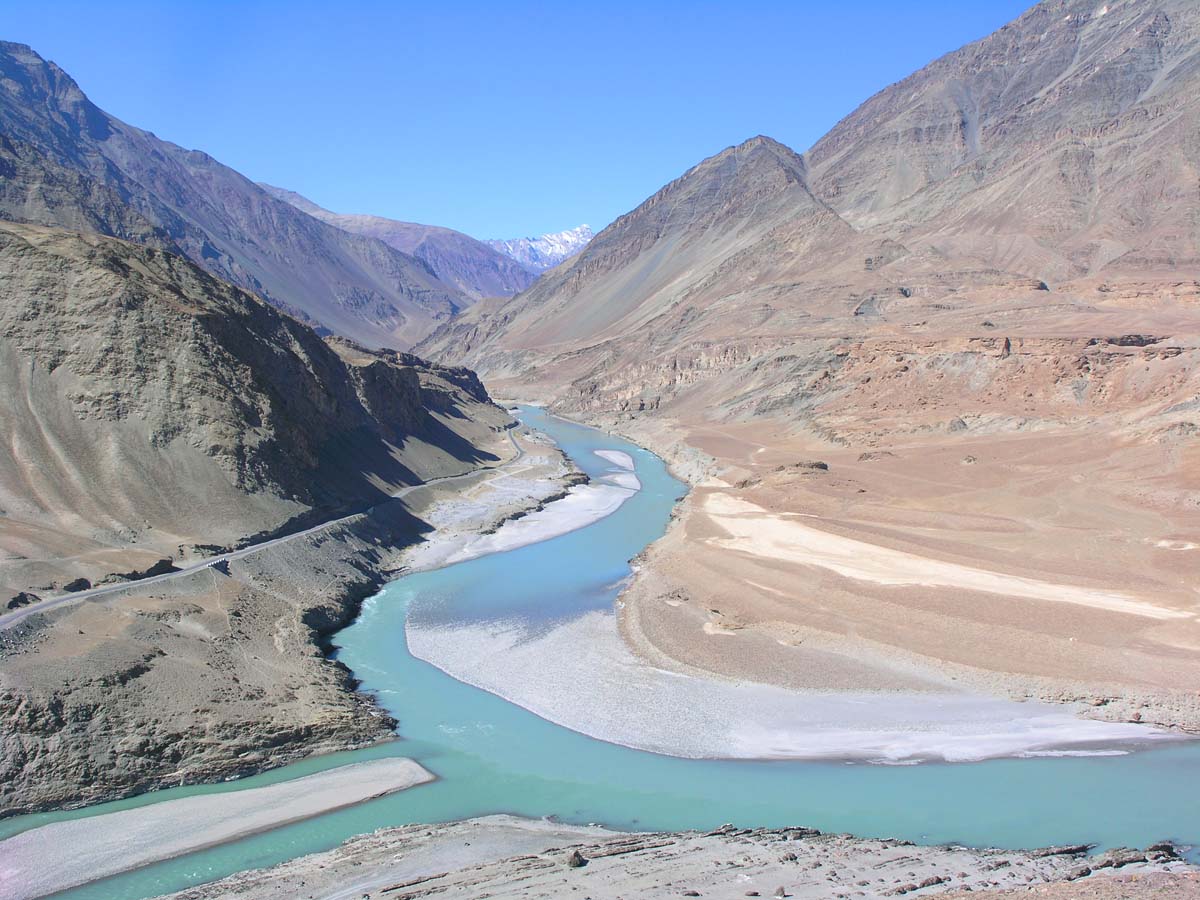


                                                               Ladakh Peaceful  Rivers ©Solange Hando

Equally stunning but in lovely pastel colours, this is the confluence between the Indus and Zanskar rivers, near Ulektopo, not too far from Leh. In winter the frozen Zanskar attracts adventurous trekkers but in the brief summer the scenery is just magic, two rivers for the price of one...


                                                                Bodhnath in Kathmandu ©Solange Hando

My favourite temple in Nepal's capital, it is said to be the world's largest Buddhist stupa which regained its former glory after the 2015 earthquake. Dawn and dusk are special times when Tibetan refugees and Nepali alike walk seven times around the shrine, meeting friends and spinning prayer wheels, sometimes prostrating, as monks chant to the sound of long horns, cymbals and drums.


                                                                     Pokhara in Nepal ©Solange Hando

A brief flight or a road journey west of Kathmandu, this is the lakeside resort of Pokhara, altitude from only 900 metres or so but an ideal base for trekking in the Annapurna or just enjoying the hill top views, snow-capped mountains stretching 140 km, including the iconic Fishtail right in front of you. Browse around the resort, sail to the sacred island and see the sunrise from Sarangkot.


                                                                     Sunset on Everest ©Solange Hando

View from Kalapatar, the 'black rock' at 5644 metres, above Gorak Shep, the original Base Camp.
All dark except Everest, catching the last rays of the sun
Amazing


Saturday, 3 April 2021

Kyrgyzstan Mountains and Lake, Central Asia

Kyrgyzstan, Land of Mountains ©Solange Hando

They call it 'little Switzerland at the heart of Asia', a land-locked country where only 10% is below 5000 feet. The land is pristine, small population, few tourists except those in the know staying in Bishkek, the pretty village-like capital, and a sprinkling of lakeside resorts.


Ala Archa Park near Bishkek ©Solange Hando

Just 20 miles from the capital, Ala Archa is a national park, just one of 83 protected areas in the country. Boasting 20 glaciers and 50 peaks, reaching up to 16,000 feet, it's an enticing place to ride or trek among forests, waterfalls and rushing streams, looking out for wild flowers and fragrant juniper.


Burana World Heritage  ©Solange Hando

Among the ancient remains that pop up here and there is the Burana minaret rising in the middle of nowhere, above the ruins of a medieval town. Stairs lead to the entrance but beware, the interior is steep, narrow and very dark. Well worth the effort as the view from the top is superb, framed by the Tien Shan mountains in the distance while horsemen far below round up their cattle.


Lake Issyk-Kul ©Solange Hando

At over 5000 feet, Issyk-Kul is one of the deepest and largest lakes in the world, 113 miles long and nearly 40 across in places, and fed by 118 rivers. Framed by snow-capped mountains, it is part of a biosphere reserve covering 20% of Kyrgyzstan. The lake never freezes and you can enjoy hot springs much of the year.


Stunning Issyk-Kul, no one around ©Solange Hando

The north shore is the easiest to access with a good road following a straight line much of the way. You'll find a few guest houses and a stylish Meridien resort alongside a scattering of quiet farms and yurts.
The east end of the lake is in Karakol, a pretty little place with traditional accommodation. It's a great base to explore the rugged southern shore and ski in winter. The mountains are always close by. 


Skazka Canyon ©Solange Hando

Among top attractions near the southern shore is this awesome canyon whose name means 'fairy tale'. It is made of red sand, all crumbly and scorching hot with just a few wild flowers, including gorse and alpine ferns. In some places the lake seems almost within arm's reach.


Yurt in Kyrgyzstan ©Solange Hando

These traditional huts are still used by farmers in their summer pastures and also for special celebrations, especially weddings. Some yurts serve meals to visitors and on occasions offer a comfortable night among colourful cushions, blankets and rugs.


Barksoon, my Favourite Valley in Kyrgyzstan ©Solange Hando


Saturday, 6 February 2021

Travel Photos? So much to Remember

India ©Solange Hando

This is Khardung La in Ladakh, which claims to be the highest road pass in the world. Set on an old trade route, it is the gateway to the Nubra Valley but closed in winter.
You need a special permit to drive up the steep meandering road with precipitous drops, especially dramatic on single lane sections. Not much traffic up there but the odd overloaded bus or local authorities who always have the right of way. 


Namibia ©Solange Hando

South of Namibia's capital, Windhoek, that was an easy stop but truly exciting as you step out on the southernmost latitude where you can see the sun directly overhead. It wasn't quite the summer solstice just yet but knowing that the Capricorn stretches 36788 kms around the earth was impressive.


Eswatini ©Solange Hando

This is in Eswatini, the former Swaziland, one of Africa's smallest countries, bordered by Mozambique and South Africa. This was the final day of the annual Reeds Festival where after renewing the royal enclosure, women from across the country perform for the king.
'They all dance for the king,' said my friend, 'then by the end of the day he will choose his next wife.'
'Would you like to join?'


                                                               Canada ©Solange Hando

This is the amazing Athabasca glacier spreading out from the Columbia, the largest icefield in the Rockies. You can drive up there from Jasper or Lake Louise then enjoy a dizzying skywalk above the gorge, followed by a ride on the giant Ice Explorer. Then you can walk a few steps on the glacier, listening to rumbling avalanches and creaking crevasses as snowy peaks tower above you, at over 3000 metres.


                                                                     Reunion Island ©Solange Hando

Set in the Indian Ocean, this is a French Island between Madagascar and Mauritius, just 63 by 45 kms but one of the most active hotspots on earth.
This was my first trip in a microlight, circling and dipping around craters, ravines and the mighty Furnace Peak which erupts several times a year.  I was terrified but I loved it. Awesome...


                                                                       Madagascar ©Solange Hando

Four hours from Antananarivo, the capital, this is Lemur Island, on the edge of the Andasibe National Park. It's a refuge for wounded or endangered lemurs, including the ring-tailed above who decided to perch on my head. Approach the grasslands in a canoe and they venture right to the edge, exploring any stranger with their soft padded feet. 


                                                                     Himalayas ©Solange Hando

I love the Himalayas and this is taken on the fabulous flight from Kathmandu to Paro in Bhutan, the closest international airport to the kingdom's capital, Thimphu.
See the pyramid summit of Everest, 8849 metres, at the back, rising above the Nuptse wall to the left and the Lothse Peak to the right.
If you ever fly this route, make sure you get a seat on the left-hand site on the way to Paro.


Saturday, 23 November 2019

Bangkok, City of Angels

Wat Po ©Solange Hando

This 'Temple of the Reclining Buddha' is my own favourite in Bangkok, the city's first university now specialising in traditional Thai massage, wonderfully relaxing and energising.

The temple claims 91 stupas (see a few on this picture), over 1000 Buddha images and most revered of all,  the Reclining Buddha, 46 metres long and covered in gold leaf.


Chao Phraya River in Bangkok ©Solange Hando

They call it the River of Kings and its is as busy today as it has always been, river buses and ferries, cargo and tourist boats, including the long tail speed boats ready to cool you down on a hot day.

There are 34 piers altogether, so make sure you know where to get off, but if you end up on one of the canals, you will discover plenty of traditional life along the banks.


Temple of the Emerald Buddha ©Solange Hando

In the grounds of the Grand Palace, Wat Phra Kaew is home to the most auspicious statue, finally brought back to Thailand in the 18th century.

 It measures only 66 cm, possibly made of jasper or jade rather than emerald, and clad in golden clothes which are changed according to season. It is so precious no photographs are allowed so the image above is one of the guardians.


Damnoen Saduak Floating Market ©Solange Hando

There are at least 10 floating markets in the capital but most popular is this one, 80 km away but usually including another attraction or two on a morning trip.

Colour and fragrance is what it's all about it, plus local crafts, souvenirs galore and plenty to eat and drink as you gaze at the incredible traffic jam, only boats of course, punting their way across the water.


Spirit House in Bangokok ©Solange Hando

As pretty as doll houses, these traditional shrines are found all over the city, providing a home for local spirits who may be disturbed by new buildings or people. You find them outside homes, offices, schools and so on.

Incense is burned and offerings are laid out every day, orchids, lotus, water and more. They ensure good luck, prosperity and peace for everyone.


Wat Arun, Bangkok's Landmark ©Solange Hando

Named after a Hindu goddess said to radiate sunrise, the iconic Temple of Dawn is a must see, beautifully lit up after dark though equally stunning during the day when coloured glass and Chinese porcelain glint on the slender spires.

You can climb up part of the central spire -very steep steps, both up and down,- but worth it for the views across the river, from the Grand Palace to nearby temples.


Now can you read Thai?
Don't worry, help is always at hand...

©Solange Hando


Saturday, 5 October 2019

Spice Village Hill Resort in Kerala

Cottage in Spice Village ©Solange Hando

Close to spice plantations and the Periyar National Park, Spice Village is a CGH Earth resort, 'clean, green, healthy' Located on the edge of Kumily village, it's in the Thekkady district of the Kerala's Western Ghats.
Accommodation is in traditional bungalows scattered in the greenery, built with local materials and thatched with elephant grass. It's an oasis of peace, beautifully quiet at night.


Guest Room, Spice Village ©Solange Hando

Rooms are spacious and clean and at over 700 metres, pleasantly cool so no need for air conditioning. Furniture is made of recycled pine wood and floors are tiled, with coir mats as needed.
It may look a little spartan but with hot water, soft lighting and all the usual amenities, everything you might need is at hand.


Lawns and Trees in Spice Village ©Solange Hando

There's a lovely garden to relax in the shade, enjoy your lunch or perhaps a cool drink or herbal tea. Friendly staff make you feel most welcome and although you may well be tempted by the colourful stalls along the lanes, take time to unwind at least for a while in your little haven.
Other facilities include a Green Leaf Ayurveda Centre, yoga and meditation, badminton, tennis and activities such as trekking, bamboo rafting or visiting a spice plantation.


Tamarind Restaurant at Spice Village ©Solange Hando

Overlooking the swimming pool is Tamarind, the main restaurant serving regional and international fare. Or you could try the '50 mile Diet Restaurant' which guarantees that all ingredients are produced within a 50 mile radius. There's is also a pleasant Woodhouse Bar where you can meet and chat with your friends. 


Spice Village Organic Garden ©Solange Hando

Then wander up the slope and right at the top, beyond the last cottages, you will discover the resort organic garden where fruit, vegetables, lettuce, spices and more are grown for healthy and tasty dishes. 
Besides sheer eating pleasure, it's good to know that so many local people have found employment in this caring Spice Village  hotel, grounds and garden.


The Periyar National Park ©Solange Hando 


Sunday, 22 September 2019

Bukhara on the Silk Road in Uzbekistan

Bukhara Poi Kalyon Complex ©Solange Hando

Madrassas, mosques, mausoleums, there's so much to see in Bukhara you'd need a full week to do it justice but if time is limited, Poi Kalyon is the place you should not miss, right at the heart of the Old Town.

Meaning 'at the foot of the Great',  it includes a mosque which can hold 10000 worshippers, a madrassa still providing a four year programme of religious studies and a minaret rising 45 metres above the town.


The Trading Domes ©Solange Hando

A popular access to the complex is through the restored medieval domes, originally housing the money changers, hat makers and jewellers.  Today you can shop for all sorts of local crafts, from puppets to pottery or textile, including Suzani embroidery, enhanced with decorative threads, and Ikat silk shimmering in rainbow colours.


Weaving Carpets in Bukhara ©Solange Hando

But especially prized are the lovely silk carpets, among them the 'magic' carpets, so called for they are double-sided so you get two for the price of one. Not cheap but quality guaranteed.

Designs range from Uzbek geometric patterns to Persian flowers and the more you walk on your silk carpet, the tighter the knots and the longer it will last.


Lyabi Hauz Complex ©Solange Hando

Shaded by mulberry trees, the square is set around an ancient reservoir, 42 metres long by 36 across, glistening with the reflections of  traditional buildings draped in blue tiles and wood.

It was once a focal point for merchants and entertainers but today this is a beautifully quiet place where you can relax by the water or sip a drink in the shade.


The Ark, Bukhara's Landmark ©Solange Hando

With its mud brick walls glowing in the sun, the fortress of the Ark is one of the city's top icons, first recorded in the 7th century and reconstructed many times.

What you see today mostly dates from the 16th century, partly restored after a major fire, Beyond the steep stone ramp and gate, you will find a couple of museums, calligraphy exhibits and spine-chilling stories from the past. 


Remembering the Silk Road in Bukhara ©Solange Hando


Saturday, 24 August 2019

Uzbekistan Samarkand on the Silk Road

Samarkand on the Silk Road ©Solange Hando

Samarkand dazzles you every step of the way with magnificent buildings restored with great dedication and fond memories of medieval merchants.

Once laden with exotic goods, they travelled from far and wide across Central Asia, marvelling, just as we do today, at the legendary wonders of this amazing city.


The Bibi Khanym Mosque ©Solange Hando

Among the top attractions is this 15th century mosque, commissioned by Bibi Khanym as a gift for Timur, her husband and victorious warrior, now a national hero. The mosque was rebuilt after an earthquake but still feels haunted by one of the saddest stories in the land.

Having fallen in love with Bibi, the architect kissed the lady on the cheek but when Timur returned from his campaign in India, he noticed the mark and executed his rival. Some say the lady suffered the same fate but no one is really sure. 


Shah-i Zinda Necropolis ©Solange Hando

Up on a hill on the edge of town, this necropolis includes a mausoleum honouring the 'Living King', cousin of the Prophet Mohammed and patron saint of Samarkand.

It is 35 steps to the top, a challenge on a hot day, but well worth the effort as you join worshippers making their way through the long alleyway of shrines, covered in blue and turquoise tiles.


Ulug Beg ©Solange Hando

Born in 1394, Timur's grandson was passionate about culture and science, especially astronomy for which he built the world's largest observatory at that time, on a hill but underground to protect it from earthquakes. He studied the sun and the moon and accurately positioned over 1000 stars.

Unfortunately, though widely remembered as an astronomer, Ulug Beg was not a strong ruler and he was eventually overthrown and executed by his son.


The Registan ©Solange Hando

Designed between the 15th and 17th century, Samarkand's central square claims three fabulous madrassas, fronted by a raised viewing platform for snap-happy tourists and wedding photos. The oldest building is the Ulug Beg Madrassa, on the left..

Enjoy the glowing towers and archways, ribbed minarets, restored mosaics, small souvenir shops and workshops and in the Tiger Madrassa on the right, free demonstrations of traditional music. Don't miss the stunning sound and light shows in season.


Registan
The golden ceiling in the central Tilla Kari Madrassa ©Solange Hando 

Saturday, 10 August 2019

Kerala in South India

Kochi Fishing Nets ©Solange Hando

Formerly known as Cochin, this is the 'Queen of the Arabian Sea', a fascinating city set on a peninsula and islands around a vast natural harbour.
The old district has a rich history and there's a lovely promenade along the waterfront lined with stalls and seafood restaurants, and a beach, best at the far end. But most iconic are the Chinese fishing nets, each one pulled in and out of the water every 15 minutes or so.


Kerala Backwaters ©Solange Hando

Then just inland are the Kerala backwaters, the highlight of any trip to southern India. There, for a few hours or overnight, you can explore the waterways as you sail across canals, lagoons and lakes in your traditional bamboo-covered boat. 
Banks are beautifully lush and green and it's a great place to see the local life as you pass a village or two or a Hindu temple glowing in the sun. The main waterways and big Lake Vembanad may bustle with tourists and local craft but there are some amazingly quiet areas, tucked in the greenery away from it all. 


Classical Kerala ©Solange Hando

Traditional culture is alive and well, not just for visitors but for anyone in Kerala, it's is a matter of pride and identity. Above is a main character in a Khatakali performance where after the opening rituals, a centuries-old story is performed, expressing every emotion through eye and face movements.
Heavy make up and large colourful costumes add to the drama, punctuated with the relentless beating of a drum. 


Up in the Western Ghats ©Solange Hando

A short drive east leads you to the hills of the Western Ghats, an entirely different world but still part of Kerala.The Periyar Wildlife sanctuary has tree top look-outs where you might spot elephants or a lone tiger, if you are really lucky, and myriad birds if you sail on the lake where the Mulla and Periya rivers meet.
Up there, at over 700 metres the nearest village is Kumily set among spice plantations, including cardamom, the most important, which gives its name to the nearby hills.


Tea Plantations in Western Ghats ©Solange Hando

The ride from the coast to the hills is spectacular, winding past tall rubber trees, coffee bushes, spice gardens and extensive tea plantations, rolling emerald green across the slopes. Best overall views are from the pilgrimage site of Pattumala on St Francis Mount.


Sunset on the Arabian Sea, Kochi Beach ©Solange Hando