Kathmandu Bodhnath Stupa ©Solange Hando
Following the 2015 earthquake work is still ongoing around the city but this magnificent stupa has been fully restored, thanks to donations.
One of the largest in the world, it is in the Tibetan district and at dawn and dusk, you can join devotees of all ages walking around the shrine, meeting friends and spinning prayer wheels.

The Way to Swayambhu in Kathmandu ©Solange Hando
Aptly known as the 'monkey temple', Swayambhu is the other main Buddhist site in the capital with its own stupa and shrines on a hilltop. A taxi can take you to the entrance but walking up through the trees is much more atmospheric.
On a clear day, you can see the snowy peaks of the Himalayas rising above the Kathmandu valley.

On the edge of the city ©Solange Hando
Kathmandu is a bustling place, full of traffic and people, yet you can enjoy the natural world just on the edge of town.
These lovely forested hills are above Bodhnath, close to the Kopan monastery which you can reach on foot or road if you'd rather. No crowds up there, just walking trails though the trees leading to forlorn villages and prayer flags fluttering in the breeze.

Pokhara, Phewa Lake ©Solange Hando
A short flight from Kathmandu, Pokhara is a must-see, a scenic lakeside resort framed by the Annapurna, including the iconic Fishtail in the centre of this picture.
The nearby town is a popular base for trekkers on their way to the Annapurna but the lake delights everyone whether you walk along the banks, sail across the water or head for the Holy Island to relax with the locals and gaze at the view.

The Shanti Stupa in Pokhara ©Solange Hando
Rising on a ridge above the lake, this is one of many pagodas built under the guidance of a Japanese monk to promote peace around the world.
Take a taxi to the gate or walk up through the forest then follow the trail along the hill top to enjoy magnificent views of the lake, the Annapurna range and far beyond (see previous image).

The View from Sarangkot ©Solange Hando
On the other side of the lake, Sarangkot is another attractive spot for close-up views of the Annapurna, just a short drive from Kathmandu and up to the hilltop. Accommodation is available so you can enjoy sunset and sunrise.
Paragliding base nearby.

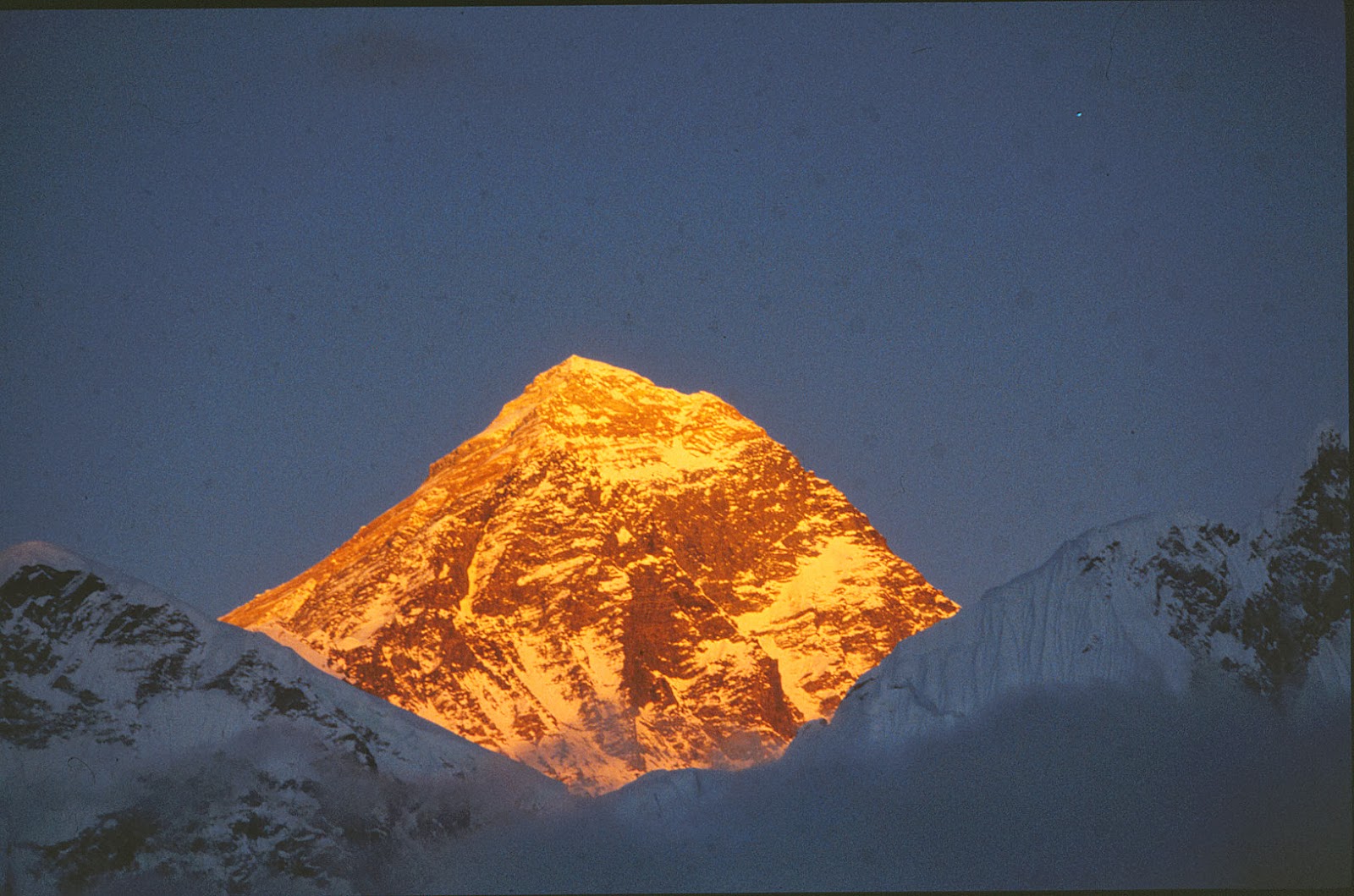
Sunset on Everest ©Solange Hando
Kathmandu and Pokhara are easy to combine in a short space of time but if you have plenty, then trekking to Everest Base Camp is a true adventure. This image was taken from the top of Kalapatar, the 'Black Rock' (18209 feet) rising above Gorak Shep, the original base camp.
2020 is Visit Nepal Year so special events will be organised across the country.
Spring is a great time to visit for rhododendrons but for clear views of the Himalaya, mid-October / early November are best.