Showing posts with label Japan. Show all posts

Saturday, 6 April 2019

Japan Cherry Blossom

Cherry Blossom in Takyama ©Solange Hando

When winter draws to a close, the whole of Japan looks forward to the arrival of cherry blossom. 
Every night on the news, the weather is followed by the 'cherry blossom forecast.'


Blossom in the Mountains ©Solange Hando

It starts in the south in the subtropical island of Okinawa, reaching Tokyo late March and finally the northern island of Hokkaido in May.
But should you miss it on the plain in Honshu, the main island, you might catch it in the mountains where it comes out later.


Springtime in Honshu Island ©Solange Hando

As iconic as Mount Fuji, Japanese cherry trees claim over 200 varieties, producing all kinds of blooms, from the most delicate flowers to frothy clouds of colour in every shade of red and pink or white, the rarest and definitely a favourite. 


Hanami Treats ©Solange Hando

Hanami, or flower-viewing, is enjoyed throughout the islands, with music and dancing, lots of parties and feasting on blossom-flavoured snacks, sweets, dumplings, kitkats, crisps,pastries, beer and even suitably flavoured Starbucks latte.


Cherry Blossom in Hida Folk Village ©Solange Hando

According to legend, Hanami began in the 8th century when Emperor Saga and his Kyoto Court offered flowers to the spirits dwelling in the trees. This was accompanied by plenty of sake, the traditional rice wine.


'Pink Snow' in Matsumoto ©Solange Hando

After just a couple of weeks, blossom falls from the trees carpeting the land with 'pink snow'. For many Japanese this is the time to remember that life is short and like the beautiful cherry blossom, we are just passing through.


Lovely Blossom in Tokyo ©Solange Hando


Saturday, 24 October 2015

Tokyo, Cool and Traditional

Tablet and Kimonos, Tokyo ©Solange Hando

From technology to magnetic trains, Japan is zooming ahead but on special occasions, the traditional dress gives everyone a chance to look fabulous while preserving cultural links with the past.

Then of course, you do have to record it all on your tablet and share it with friends...


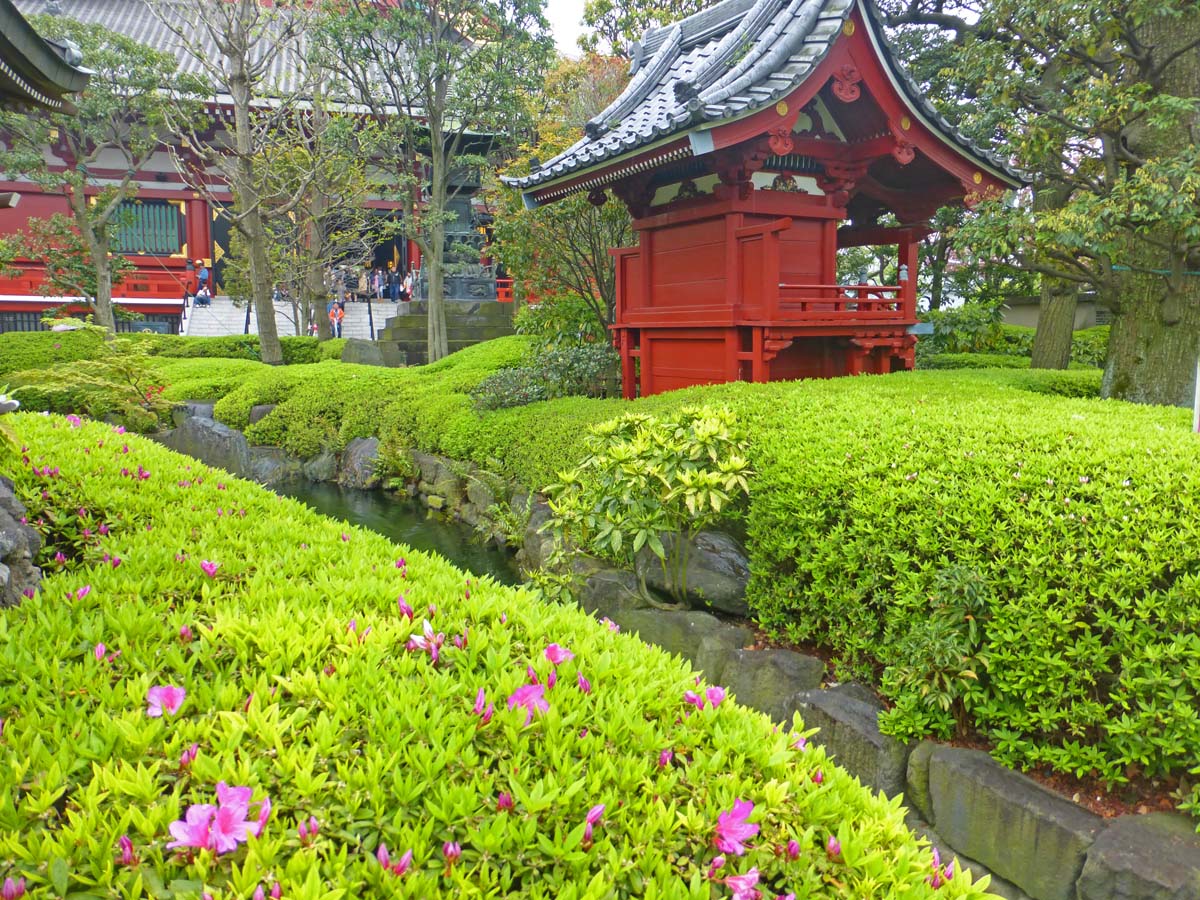
Buddhist Shrine in Tokyo ©Solange Hando

This is a quiet hidden corner in Asakusa Kannon, Tokyo's oldest Buddhist complex and a bustling place where among clouds of incense, statues and paper lanterns, fortune tellers and fast food chefs cater to every visitor's needs.

It's a popular temple if you wish to seek advice for the future or earn merits for the after life, for yourself or others.


Shibuya ©Solange Hando

It's rather different in Shibuya which many regard as the Piccadilly Circus of Tokyo. This is the place to meet your friends by the statue of the legendary dog who waited until death, for a master who never returned.

It's a lively district so don't be fooled by the empty crossings on the picture. As soon as the lights turn green, crowds will appear from nowhere, as disciplined as you would expect them to be for this is Tokyo, not London or Paris.


Traditional Shinto Wedding in Meiji Shrine ©Solange Hando

The Shinto religion is based on respect for nature and the many spirits who live there so shrines are located in natural surroundings.

When this shrine was built on the edge of Tokyo to honour Emperor Meiji, 100,000 trees were planted over seven years to welcome the spirits, 

Weddings aside, look out for the wishing tree where worshippers and visitors are invited to leave a message, as did President Obama for world peace.


Tokyo 21st Century ©Solange Hando

But whatever the traditions in Tokyo, the enduring image is that of a modern city with soaring skyscrapers and stunning architecture from the business district to the elegant bridges across the bay, the Tokyo Tower or the popular Statue of Liberty.

Yet, for many visitors, much of the charm lies in the careful handling of old and new, preserving cultural traditions while embracing the modern world and a bright future.

Here's to Tokyo, Ready to Go


 ©Solange Hando


Saturday, 11 July 2015

Hiroshima, Miyajima Island across the Bay

Japan's Iconic Landmark, Miyajima ©Solange Hando

A short ferry ride across the bay of Hiroshima, Miyajima, the 'Island of Shrines', claims World Heritage status. It's one of Japan's most sacred places and you are sure to see the deer roaming free along the shore and up in the hills.
Rising out of the sea, the traditional red gate, or torri, marks the approach to Itsukushima, the Shinto shrine built on stilts along the shore and surrounded by water at high tide. The gate only dates back to 1874 but pilgrims have worshipped on the island for centuries.


The Daisho Temple, Miyajima ©Solange Hando

The main shrine may hold you spellbound for a long time but it's worth taking a look at the nearby five-storey pagoda, the 'hall of 1000 mats' and the Daisho Temple nestling on the luxuriant slopes below the Misen Mountain.
With its pagoda roofs and steep wandering paths, it's a fairytale sort of place sprinkled with stone statues from tiny figures in fancy hats to a giant man-bird or rows of images glittering in a cave festooned in lanterns.


Cute Little Men ©Solange Hando

Down by the waterfront, the 'high street' is a bustling little place lined with souvenir stalls and barbecues where skewered oysters, grown in the bay, mingle with all sorts of delicacies.
The Japanese are fond of all things 'cute'  and the visitors follow suite,easily tempted to step inside and pick up a traditional koi banner or a wooden spoon to eat Ramen. The spoon, also used to scoop up rice, was invented on the island, they say, and half-way down the street, there's a giant model on display to prove it.


Going Local on the Island ©Solange Hando

Beyond sightseeing and shopping, Miyajima has much to offer, especially if you enjoy the great outdoors. Minutes from the shore, the hills beckon with pristine scenery and quiet trails and a week on the island could simply fly by, leaving you refreshed and relaxed.
If time is short, a cable car can take visitors almost to the top of Misen or for those who would like to take a close look at the gate, there are canoes and local boats.


Guardian of Itsukushima ©Solange Hando


Saturday, 6 June 2015

Hiroshima, Hope and Peace

Hiroshima, the A-Bomb Dome ©Solange Hando

On 6th August 1945 at 8.05 am, 'Little Boy', the first atomic bomb, was dropped over Hiroshima, killing 70,000 people outright, mostly civilians, and as many again from radiation in the following months and years.
War crime or justified, the controversy goes on but there was nothing 'little' about what hit Hiroshima that fateful morning. The epicentre was the Shima hospital and the building above the closest to remain standing, in part.
The A-Dome is now on the World Heritage list as a witness to the tragedy and a stirring symbol of hope for a future free of nuclear destruction. 


The Children's Peace Monument, Hiroshima ©Solange Hando

Beyond the Dome, the Peace Memorial Park has the same dual purpose with a special area dedicated to the thousands of children who died as a result of the bomb.
The monument (above) shows a young girl holding a crane. Her name was Sadako Sasaki and it is said that while she was in hospital waiting to get better, she folded 1000 paper cranes. She died of leukemia at the age of 12 and  paper cranes have become a symbol of peace. They are sent by children from all over the world to be displayed in glass cases around this monument.


Peace Concert in Hiroshima ©Solange Hando

On ground laid to waste by the bomb, the Peace Park was open in 1955, a place to wander around near the river, relax and reflect  as you take in the memorials, the Peace Bell or the Mound containing the ashes of 70,000 unidentified victims.
The nearby museum is a silent sobering place, beyond comprehension for most visitors, but just as moving on my visit was a small concert outside where hymns such as 'Amazing Grace' sent shivers down your spine yet gave you with hope for the future.
The above piano was rescued from the bomb site.


The  Cenotaph in Hiroshima Peace Memorial Park ©Solange Hando

This concrete cenotaph contains the names of all known victims.
It is in alignment with the A-dome and the Eternal Flame lit in 1964, which will burn continuously until the world is free from the threat of nuclear destruction.


Paper Cranes in Hiroshima Peace Park ©Solange Hando

'I will write peace on
  your wings
and you will fly
all over the world.'
(Sadako Sasaki)