Saturday, 31 October 2015

The Iguazu Falls, Argentina versus Brazil

Shooting Rainbows over Iguazu, Argentina ©Solange Hando


The natives called Iguazu ''big water' and with an average flow of 10 million litres per second in season, it's easy to see why.Stretching for 2.7 km, the cliff face is streaked by up to 300 waterfalls, plunging 60 to 90 metres from the upper to the lower Iguazu river.

Straddling Argentina and Brazil, the falls came to the world's attention when Spanish explorer Cabeza de Vaca stumbled upon them in the 16th century. 'Santa Maria', he exclaimed as he set eyes on one of the most powerful cataracts, and so it is still called today.


Crested Jay in Iguazu ©Solange Hando

Surrounded by rainforest, the Iguazu National Parks are protected on both sides by UNESCO and wild life can often be spotted near the falls, especially birds like macaws, parrots, toucans and jays.

Meanwhile caimans lurk in the lower reaches, jaguars and coral snakes hide in the forest and monkeys play havoc in the trees.


The Devil's Throat, Argentina ©Solange Hando


On the Argentinian side, tourist amenities have been kept well away from the falls and to reach the most popular cataract, you have to board an eco-train then make your way across the upper river on a km long walkway.

All seems placid at first until thunder begins to roar and suddenly you come face to face with the mighty Devil's Throat, the easiest fall to access on that side where you can also explore a network of trails.


 View of Iguazu Falls from the Air ©Solange Hando

Argentina claims 80% of the falls but since the cliff face is shaped like an inverted J, the Devil's Throat offers a limited view.

Brazil on the other hand reveals a stunning panorama across its own falls and most of those in Argentina. You can view the falls by helicopter and although amenities on that side are much closer to the falls, they're out of sight as soon as you make your way down the panoramic path.


Raccoon Looking for Spoils in Iguazu ©Solange Hando

Of course this raccoon knows nothing of borders but if you want to enjoy Iguazu from both sides, it's easy enough. It's just a short drive to the border bridge where the paint changes colour half way along -to reflect the national flags- and you can get a glimpse of Paraguay as well.


Rainbow over Iguazu, Brazil ©Solange Hando


Here on the Brazilian side, you look right across the falls, first from the top then at water level where a wooden walkway (top right in the picture) takes you to the heart of it all, but expect to get drenched. Or if you dare, you can hop on a boat and shoot the rapids.

For the best of both worlds, see the Devil's Throat in Argentina then go across to Brazil for the most spectacular views and a shot of adrenalin to top it all.




Saturday, 24 October 2015

Tokyo, Cool and Traditional

Tablet and Kimonos, Tokyo ©Solange Hando

From technology to magnetic trains, Japan is zooming ahead but on special occasions, the traditional dress gives everyone a chance to look fabulous while preserving cultural links with the past.

Then of course, you do have to record it all on your tablet and share it with friends...


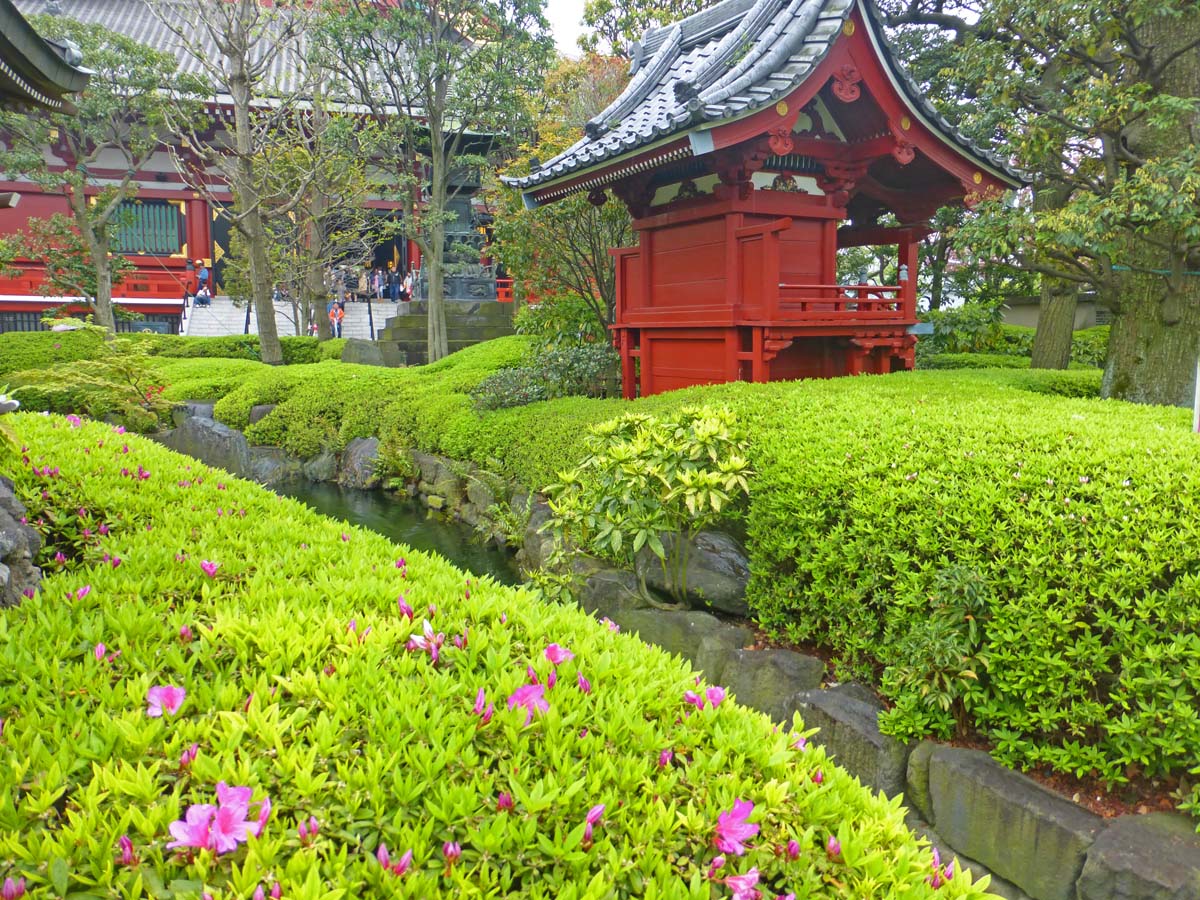
Buddhist Shrine in Tokyo ©Solange Hando

This is a quiet hidden corner in Asakusa Kannon, Tokyo's oldest Buddhist complex and a bustling place where among clouds of incense, statues and paper lanterns, fortune tellers and fast food chefs cater to every visitor's needs.

It's a popular temple if you wish to seek advice for the future or earn merits for the after life, for yourself or others.


Shibuya ©Solange Hando

It's rather different in Shibuya which many regard as the Piccadilly Circus of Tokyo. This is the place to meet your friends by the statue of the legendary dog who waited until death, for a master who never returned.

It's a lively district so don't be fooled by the empty crossings on the picture. As soon as the lights turn green, crowds will appear from nowhere, as disciplined as you would expect them to be for this is Tokyo, not London or Paris.


Traditional Shinto Wedding in Meiji Shrine ©Solange Hando

The Shinto religion is based on respect for nature and the many spirits who live there so shrines are located in natural surroundings.

When this shrine was built on the edge of Tokyo to honour Emperor Meiji, 100,000 trees were planted over seven years to welcome the spirits, 

Weddings aside, look out for the wishing tree where worshippers and visitors are invited to leave a message, as did President Obama for world peace.


Tokyo 21st Century ©Solange Hando

But whatever the traditions in Tokyo, the enduring image is that of a modern city with soaring skyscrapers and stunning architecture from the business district to the elegant bridges across the bay, the Tokyo Tower or the popular Statue of Liberty.

Yet, for many visitors, much of the charm lies in the careful handling of old and new, preserving cultural traditions while embracing the modern world and a bright future.

Here's to Tokyo, Ready to Go


 ©Solange Hando


Saturday, 10 October 2015

Aberdour near Edinburgh, Scotland's Hidden Gem

Harbour in Aberdour ©Solange Hando

Aberdour makes a lovely day trip from Edinburgh, just a 30 minutes ride from the city over the spectacular bridge spanning the Firth of Forth.

The name means 'water mouth'-here the Dour Burn enters the Forth- and when the railway replaced the pleasure steamers, the old coal harbour transformed itself once again and is now a delightful marina, tucked between the old jetty and the wooded banks.


Aberdour Castle ©Solange Hando

In this sheltered and strategic spot on the south shores of the Fife, the Mortimer family built the first castle and the nearby church of St Fillan around the 12th century. Later the property passed into the hands of the Douglas family, where it remained ever since, and was extended many times over the centuries.

At first sight, there seems little to explore but don't be fooled: these nostalgic ruins will take you by surprise, here a cavernous fireplace, there a bread oven, a tumbling tower or the original well. Best of all are the extensive terraced gardens, complete with orchard, beehive dovecot with 600 boxes and superb views over the countryside and the estuary.


Coastal Path on Aberdour Peninsula ©Solange Hando

In Aberdour, you can follow the coastal path around the peninsula, in a protected area where you might spot all sorts of birds, including oyster catchers and redshanks. Here and there, trees and shrubs cling to sheer cliffs and masses of wild flowers bloom along the trail, honeysuckle, foxgloves, thistles and more.

This is part of the Fife Coastal Path, stretching 117 miles from the Forth to the Tay and claiming the longest continuous coastal walk in Scotland.


Looking back to Aberdour from the Fife Coastal Path ©Solange Hando

By clear weather, even on this small Aberdour section, you can be sure of gorgeous views, the village nestling in the bay, the hills rolling all around, the open waters of the estuary where you might see Inchcolm Island and its abbey, popular for weddings, and Edinburgh in the distance.


Aberdour Silver Sands Beach ©Solange Hando

Then, when you reach the tip of the peninsula, you discover the fine Silver Sands, the most popular of Aberdour's two beaches, though almost deserted at times.

Add the old village with its winding lanes, the gardens blooming with flowers, the haunting castle, the quaint little church and it's no wonder that Aberdour, this small undiscovered gem, should have received so many awards in recent years, including 'Best Small Coastal Village' in Fife and Scotland.


Aberdour, Village in Bloom ©Solange Hando


Saturday, 26 September 2015

South Wales, Caerleon in Gwent, Roman Gems and King Arthur

Who's Casting a Shadow on St Cadoc's Church? ©Solange Hando


Have you ever heard of Caerleon?
Maybe not, but just three miles from Newport in Gwent, South Wales, this quiet flower-decked village reveals an amazing past.


Roman Amphitheatre in Caerleon ©Solange Hando

First it was the Celts, then the Romans arrived in AD 75, over 5000 of them, building a massive fortress which they named Isca after the river Usk.

But the Romans liked the good life and besides the remains of the barracks, you can still wonder at this lovely amphitheatre and the Baths -don't miss them, it's magic-, near the Legionary Museum where gems which slipped down the drain in Roman times are on display.


Living Arthurian Legends in Caerleon, South Wales ©Solange Hando

Later, they say, the Roman amphitheatre  became the seat of King Arthur's Round Table, after he was crowned in St Cadoc's, the parish church (top).

No one knows for sure but everyone loves a legend and along the High Street in Caerleon, the Forum greets visitors with a sculpture garden where Merlin, Guinevere and Morgan le Fey mingle with a host of legendary spirits.


The Famous Pub in Caerleon ©Solange Hando

Maybe this is what inspired the illustrious poet, Lord Alfred Tennyson, when he planned 'The Idylls of the King' in Caerleon's Hanbury Arms.

'The Usk murmurs by the windows,' he mused, 'and I sit like King Arthur at Caerleon... a most quiet village... with a little museum of Roman tombstones and other things.'


The River Usk seen from the Hanbury Arms ©Solange Hando


Saturday, 5 September 2015

Chobe Safari Lodge, Botswana

Sunset on the River from Chobe Safari Lodge ©Solange Hando

The Chobe Safari Lodge is located on the bank of the river by the same name, on the edge of Botswana's oldest national park.

This sunset view was taken from the hotel Sedudu Bar, set on stilts at the water's edge, hopefully far enough from hippos and crocodiles.


Guest Room at the Chobe Safari Lodge, Botswana ©Solange Hando

The Chobe Safari Lodge has 8 rondavels, or thatched circular huts, and 68 rooms with balcony or raised patio. Rooms have air conditioning, mosquito nets and repellent, tea and coffee facilities and TV.
WiFi is available in public places and free of charge. Other amenities include a swimming pool, beauty salon, a craft shop, two bars and an open-sided restaurant.

Grounds are spacious with trees and lawns where you are sure to spot banded mongooses, monkeys and warthogs. There is also a camp site at the far end of the compound.


Colour in Rest Room ©Solange Hando

The lodge is tastefully furnished in African style with amazing wooden ceilings in public areas and lovely details here and there reflecting the skill of local craftsmen and artists, such as painted birds in in the rest room washbasins.


Dawn Safari, Expect the Unexpected ©Solange Hando

The Chobe lodge offers a range of activities from day trips to the Victoria Falls and visits to Zimbabwe or to the nearest Namibian village but top attraction is bird and game viewing either on water or land.

There are 560 species of birds in the park and all the big game you would expect except rhinos. Sightings can't be guaranteed but guides do their utmost to please their guests, even if it means getting stuck in the sand.


Watching us Watching them ©Solange Hando

No problem, they'd eaten well...


Saturday, 22 August 2015

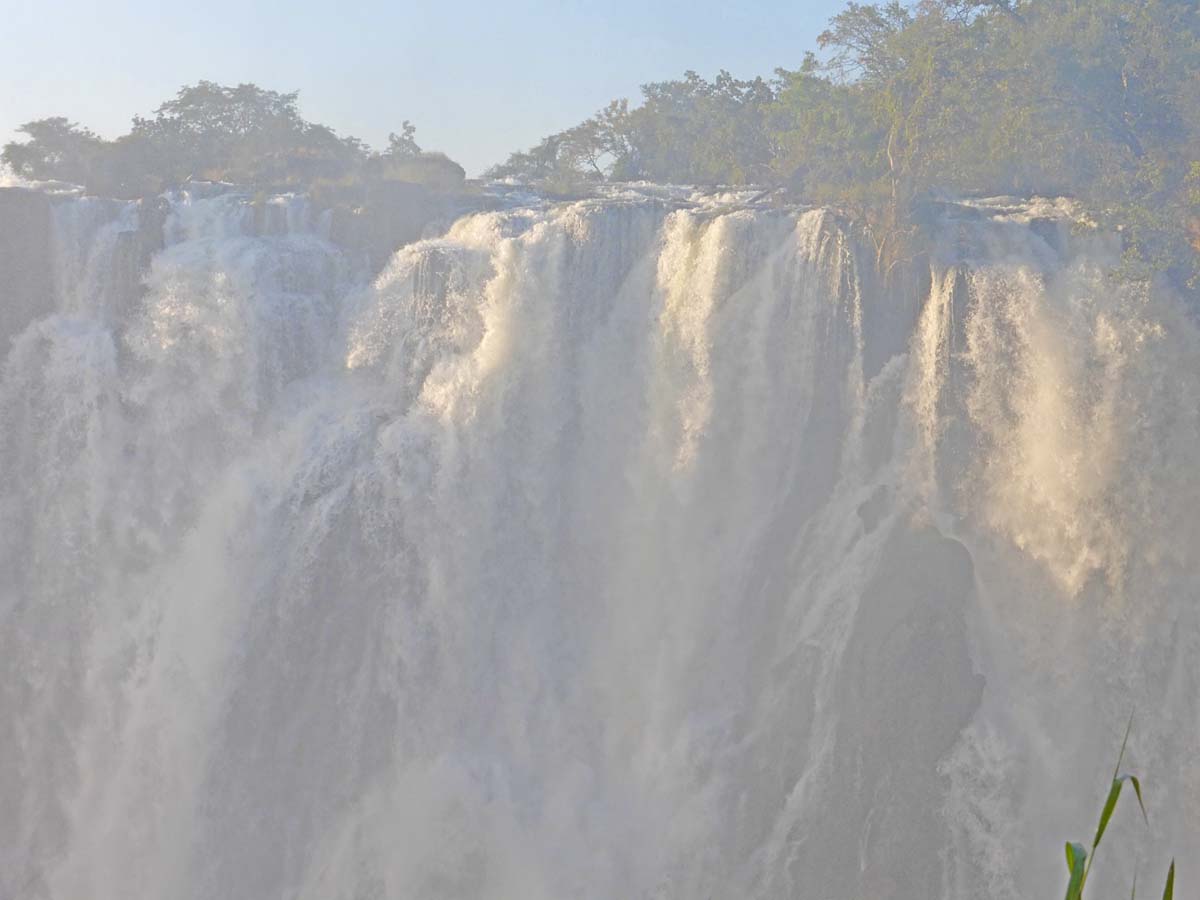
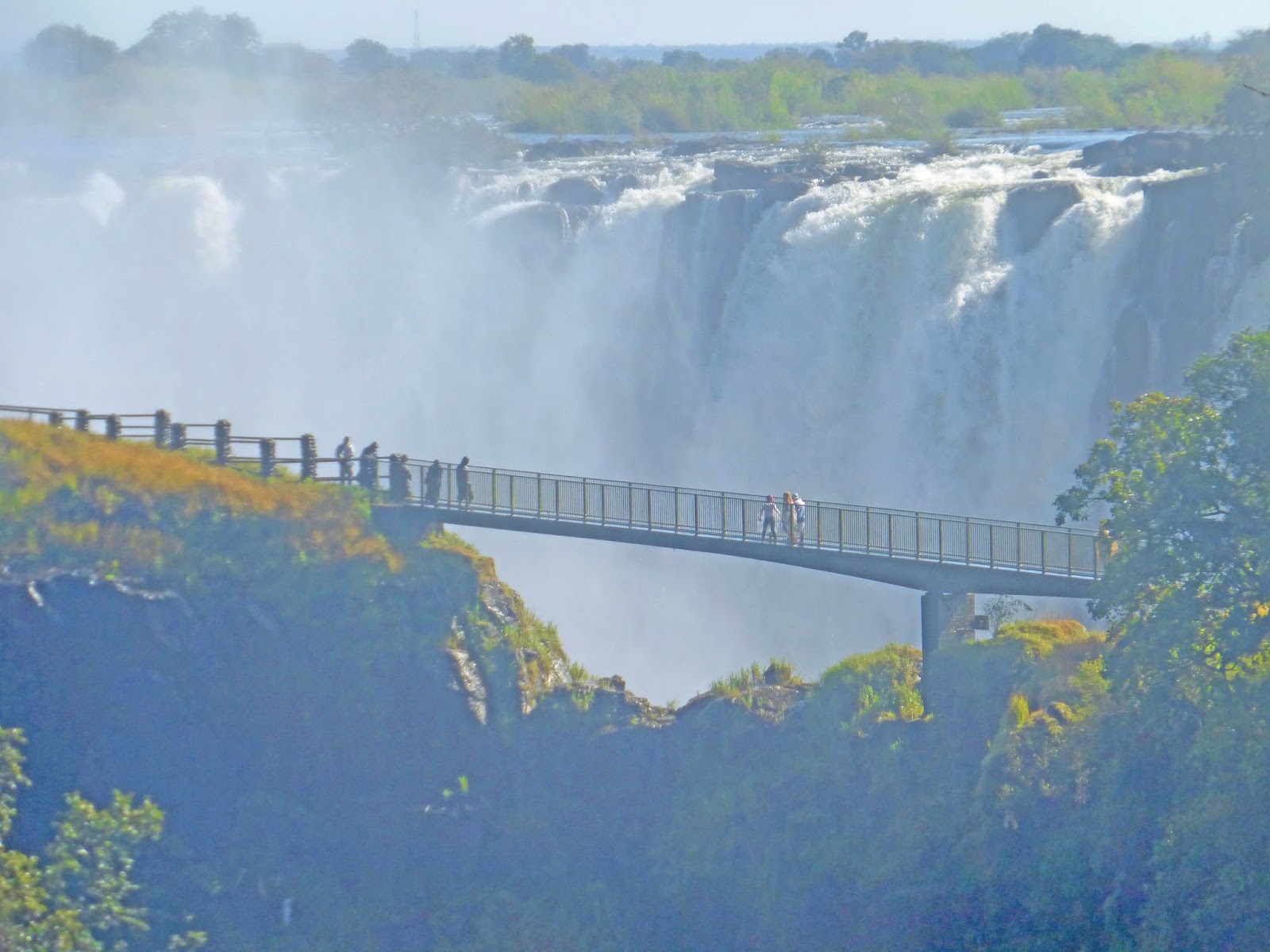
Victoria Falls, Zambia versus Zimbabwe

Arial View of the Victoria Falls from Zimbabwe (left) to Zambia ©Solange Hando


In November 1855, Dr Livingstone was the first European to set eyes on the falls, from an island in the Zambezi river and the top of a baobab tree near the town now named after him. 

Called Mosi-oa-Tunya in the local language, or the 'smoke that thunders, the Victoria Falls stretch for 1708 metres as the Zambezi rushes on its way through five gorges. The highest fall is a sheer 108 metres and in the wet season, the spray might be seen from over 40 km away.


Eastern Cataract on the Zambian side ©Solange Hando

 Zambia claims only a small section of the Victoria Falls but easy access from Livingstone international airport attracts most tourists to this side of the border. 

Nearby hotels such as the Zambezi Sun  and Royal Livingstone allow visitors to walk to the falls to view the Zambezi upper reaches and the mighty drop of the Eastern Cataract.


Knife Edge Bridge (Zambia) ©Solange Hando

Walking across the knife edge bridge is the most exciting experience but expect to be drenched as the spray pours down from great heights like inverted rain. Equally thrilling, when conditions allow, is bathing in the Devil's Pool right on the edge of the fall on Livingstone island. 

On a gentler note and still in Zambia, you can see the statue of Livingstone near the entrance, follow the photographic trail or scramble down to the Boiling Pot where the river exits the gorge to rush around a tight corner.


The Victoria Falls Bridge ©Solange Hando

Open in 1905, the bridge spans the gorge to link Zambia  and Zimbabwe. The border is half- way across and providing you leave your passport at the Zambian exit, you can walk to the end of the bridge into Zimbabwe. However you'll need a visa to go any further and view the falls from that side.

This is a rail and road bridge, with loads of trucks waiting to cross, one at a time, It's also a favourite spot for bungee jumping.


Just one of 16 Viewpoints in Zimbabwe ©Solange Hando

During the dry season, it's best to view the falls from Zimbabwe since, unlike in Zambia, the water doesn't dry up. Trails guide you safely through a patch of rainforest to 16 viewpoints but beware of 'danger point' 15 when very wet.

See the Devil's Cataract, Main Falls, Horseshoe, Rainbow and Armchair Falls and further along, the Zambian side of the falls in the distance as well as the Victoria bridge.


Viewpoint 2 along the Trail in Zimbabwe ©Solange Hando

When the Victoria Falls are in full spate, the spray can obscure the view but the thundering roar still sends shivers down your spine, whichever side of the border you are on. For a complete picture, I would recommend viewing the falls from both sides.


Saturday, 8 August 2015

Love Travel, Want to Write and Get Paid, could you do it?

On Top of the World, the Everest Range ©Solange Hando

Absolutely

Here's my top tip for all travel writers:
Think small, earn big

What does it mean?
Forget the big picture
Focus

Why?
The tighter the angle, the more original your feature will be
The more original, the easier to sell
and best of all
Multiple angles mean multiple sales from a single trip

How?
Think of an activity: bird watching, painting, hiking, yoga
Think of a local journey, boat, train, bus
Think festivals / culture /museums / castles
Check out wedding / honeymoon venues
Review a hotel
Write about food and wine
Imagine a city break, 48 hours in...
Attractions: for families, seniors, couples
Body and soul: spa, massage, inspiring location
Natural world: parks and reserves, wildlife, eco-friendly farms and lodges

'These are just a few of my favourite things'
Each one worth 1000 words
but
to make the most of your trip:
do some research before you go

You might not follow every single idea 
but the more you have, the better

More angles, more features
More cash for your next trip


 Want to know more?
Check this out


Only 100 pages to follow your dream
Come and join us


Fancy the ride? Cuba in the Wild ©Solange Hando