Showing posts with label trekking. Show all posts

Friday, 23 January 2015

Trekking in Nepal, do you really need a guide?

Sunset on Annapurna ©Solange Hando


Guide or no guide, mountains are fraught with danger even for seasoned trekkers.
We all remember what happened last autumn.
All the more reason then to put luck -and experience- on your side, chances may be slim if disaster strikes but better a glimmer of hope than none at all.


Great View, Keep Safe ©Solange Hando


Fortunately, major disasters are rare but what about altitude sickness or stomach problems? That's pretty frequent.
How will you cope on your own, or even with a friend? Help from locals? Sure, but in a poor country, that might cost you more than a guide would have done and be limited by lack of medical knowledge and language barrier.
What then?
Well, hire a guide and you can rest assured he will do his utmost to keep you safe and healthy for it is in his own interest as much as yours.


Discover Village Life ©Solange Hando


Anything else?
If you're into local culture, that's the best way to discover it and communicate with people along the trail. You may have the chance to rest in a farm house, enjoy butter tea and mountain potatoes straight from the embers, take photographs, meet a weaver or a schoolteacher, learn about local customs and daily routine.
Then of course, there's the natural world.
Did you see the honeycomb hanging from a branch, the blue poppy at your feet or the plant that will soothe your headache or that nasty insect bite?


Pokhara below the Annapurna ©Solange Hando


Fine, but how do you know you can trust your man?
Easy, don't do it on the cheap, go to a registered agency in Kathmandu or Pokhara, explain what you're looking for and they'll have someone to meet your needs, knowledgeable, trained in hygiene and first aid and speaking your language, or at least English.


View from Sarangkot, Nepal ©Solange Hando


Worthwhile?
After many visits, I'd say so...
And all for $20 a day (how much was the flight?) and just think what that would mean to your guide and his family...

Enjoy and I'll see you there...


Sunday, 31 August 2014

Easy Trek in Eastern Bhutan

Eastern Bhutan ©Solange Hando

'Are there bears in the forest?
Of course...
So are you carrying something, in case? Maybe we should find a stick...
No, they'll just go away, I'm a Buddhist, couldn't harm them'.
Thickly wooded hills rose as far as we could see but my only chance, it seemed, was to put my trust in the local gods and the prayer beads in the guide's pocket.

After all, we were heading for the monastery of the Three Gods, two days away, so as we followed the trail snaking up and down through the trees, with occasional glimpses of passes and peaks, it just wouldn't be fair to be eaten by a bear.


Farmers on the way to Trashiyangtse, Bhutan ©Solange Hando

I felt slightly reassured when I realised how many villagers were walking along the same trails, here a farmer and his wife on their way to market, there a young girl returning from the millet harvest, a red-robed Lama striding to a puja or an old woman fetching dead wood for the fire.

 In remote farms here and there, chillies dried on the tin roofs and bells and pans hung from the trees, tinkling at the slightest breeze to scare off 'intruders'. What else would anyone need?


Ready for a Good Night Sleep ©Solange Hando

Well, that was fine in the daytime but when night came, how would we fare in the tents? There was a big traditional house near the camp but only one man lived there and he was a holy man, couldn't do much if a bear turned up.

The only comfort was the constant noise of rushing water, loud enough to cover any rustling in trees or bushes. My heart thumped when something tread on my tent pegs but it was only one of the helpers on his way to relieve himself. Wow...


Early Morning at the Monastery ©Solange Hando

There were no villages or farms on day two, just forest all the way, dark, silent, with the occasional creature vanishing into the undergrowth, 'only a pheasant', said the guide, but I wasn't so sure. Now and then, we'd emerge from the darkness to catch a fleeting glance of the monastery but it never seemed to get any closer.

We reached the top of the ridge just before dark and there it was, with 1000 Buddhas on the walls, flickering butter lamps, offerings and the Three Gods, Compassion, Knowledge and Power. We were in good hands, there would be no bears that night. I slept on the floor, in a vast empty room, and pushed my backpack right against the door.

We woke to a chilly morning and at over 2000 metres, even the young monks were quiet, dreaming of home perhaps or warmer climes.


Bumdeling Wildlife Reserve, Eastern Bhutan ©Solange Hando

The final day was a long lonely walk down through the forest but when we reached the bamboo groves at last, the trail widened and I forgot  the bears. The path was muddy, slippery in places, but rice paddies glistened far below and we could see the milky river, the sand banks, the wild flowers and meadows where the rare auspicious black-necked cranes from Tibet come to rest every winter.

We sat at the water's edge and picnicked on red rice and beans while up on the ridge, the Three Gods kept a watchful eye on a lone trekker and her guide ready to return to the lost valley of Trashiyangtse, basking in brilliant sunshine in the far reaches of Eastern Bhutan.


Rigsum Gompa, the Monastery of the Three Gods near Trashiyangtse ©Solange Hando


Wednesday, 29 January 2014

Bhutan, Peaceful Punakha Valley

The Peaceful Punakha Valley ©Solange Hando

Just two hours from Thimphu the capital, over the spectacular Dochu La pass, Punakha greets you with exotic flowers and trees, rice terraces and birds twittering in feathery blue pines.

At just over 1200 metres, it's a semi-tropical valley, a great place to relax for any visitor to western Bhutan, with a choice of accommodation in traditional style ranging from budget to the luxurious Aman resort.


Punakha Dzong, Western Bhutan ©Solange Hando

Even the monks from Thimphu come here for the winter, drawn by the pleasant climate and the most important dzong in the country, home to stunning religious festivals.

Dzongs are fortified monasteries typical of Bhutan, with whitewashed walls and gilded roofs. This one rises at the confluence of two rivers, offering protection, it is hoped, against evil spirits and likely floods. The covered bridge leads to a maze of shrines and temples where myriad deities painted in bright colours adorn the walls.


Village Trek around Punakha ©Solange Hando


The Punakha valley is a trekkers' paradise, whether you opt for a day's easy ramble through villages and paddies or the six day hike from Shong Pang to Chung Soka, reaching an altitude of 3490 metres.

Rhododendrons bloom in the spring and there are pine and oak forests, remote farms and hamlets, snowy peaks peeping here and there on the horizon, and possibly a black bear or two...


Namgyel Chorten near Punakha ©Solange Hando


Attractions close to town include the hilltop Namgyel chorten with superb views over the valley and the 'infamous' temple of the Divine Madman where in exchange for a small donation, you may be blessed with a wooden phallus, but beware... This is the 'fertility temple'. 


Wednesday, 22 January 2014

Nepal, Altitude Can Kill

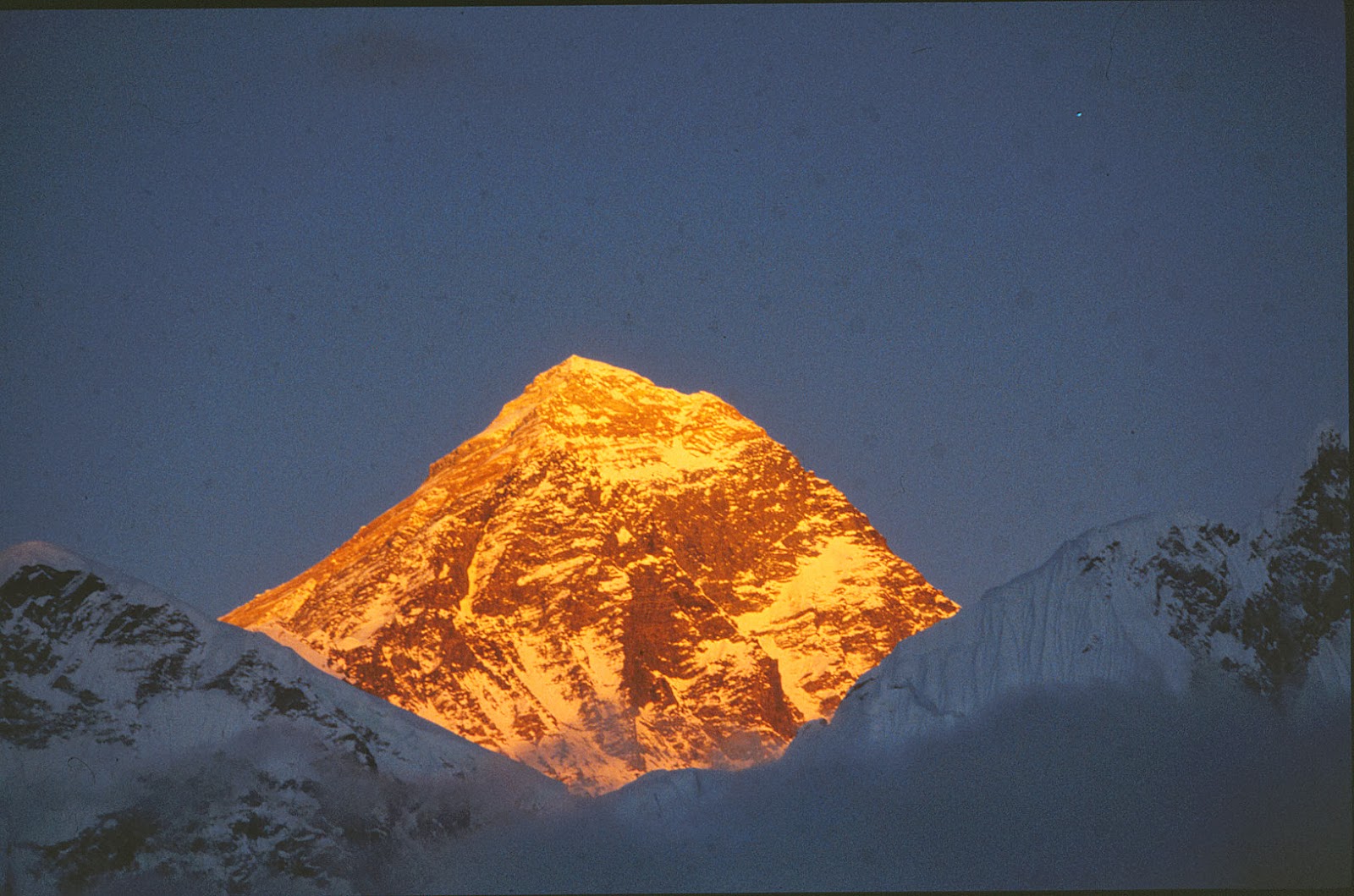
Sunset on Everest (middle) and Lothse (right) ©Solange Hando


In just a couple of months, the new trekking season will begin in Nepal and it's a good time to remember the dangers of altitude sickness. Above 3000 metres, this can hit any of us, regardless of age, fitness or experience, due to lower air pressure and oxygen levels.
Ignoring symptoms may lead to pulmonary or cerebral edema, both potentially fatal, the latter in a matter of hours, so if you'd like to see the sunset on the Everest range, make sure you look after yourself...


Namche Bazaar, Rest Day on Everest Trek ©Solange Hando


What can you do to prevent mountain sickness?
Climb slowly and take frequent breaks, even just a few minutes, to allow your body to acclimatise.
Drink plenty of water and avoid alcohol.
Whenever possible, sleep at a lower altitude than the highest reached in the day (it's all up and down).
Take a day's rest (2 nights) every time you gain 1000 metres.
Sleep in a lodge rather than a tent where you keep breathing the same depleted air.
Have a high calorie diet to boost energy levels, include garlic soup to thin out the blood.
 Diamox tablets might help but don't expect a miracle if you ignore everything else.


Looking across to the High Annapurna ©Solange Hando


What are the symptoms?
Mild:
 Anything from headache and nausea to racing pulse, breathlessness, fluid retention (can't pass water) or sleep problems.
Serious:
Worsening of the above, plus possibly dizziness, loss of balance, blurred speech, fever, cough, nose bleed, exhaustion.


Langtang Trek ©Solange Hando


What's the remedy?
In the early stages, rest for 2 or 3 nights,  follow all prevention measures and if there's no improvement, descend 1000 metres.
When things get serious, there's a Gamow pressure bag at the Pheriche clinic (Everest trek) if you're nearby.
Otherwise, your guide will probably save your life by carrying you down or call the rescue helicopter from Kathmandu.
Be aware that the helicopter will fly only in daylight hours and clear weather, providing your insurance covers such a service or you deposited the necessary cash with your agency in town.


Sunset on Everest ©Solange Hando

So keep well, keep safe and enjoy...
My favourite spot is up Kalapatar above Base Camp, where this view was taken.